


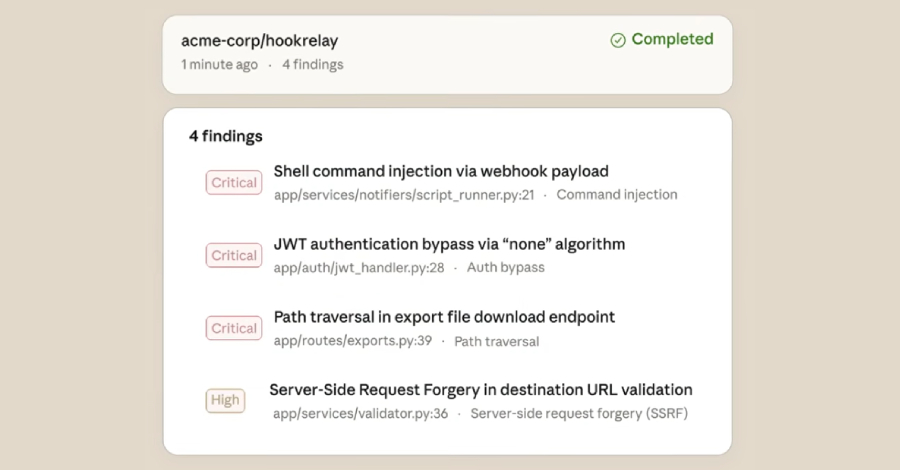
Artificial intelligence company Anthropic has introduced a significant new security feature for its Claude Code platform, aiming to bolster software security by scanning codebases for vulnerabilities and proposing patches. This groundbreaking AI-powered vulnerability scanning capability, branded as Claude Code Security, is presently in a limited research preview for Enterprise and Team customers, marking a pivotal step in DevSecOps.
The newly unveiled feature is designed to proactively identify and address security flaws within user software code. According to Anthropic, it goes beyond conventional methods to detect elusive vulnerabilities that might otherwise be overlooked. This development arrives at a time when threat actors are increasingly leveraging AI themselves to automate the discovery of exploitable weaknesses, necessitating advanced defensive measures.
Claude Code Security: An AI-Driven Defense Against Emerging Threats
Claude Code Security represents a novel approach to identifying and mitigating software vulnerabilities. By employing advanced AI, the tool is intended to provide developers with an enhanced ability to secure their applications. The company emphasizes that this feature is a direct response to the evolving threat landscape, where AI is becoming a double-edged sword in cybersecurity.
Anthropic articulated that the core functionality of Claude Code Security involves scanning software projects for potential security weaknesses. Once identified, the AI suggests specific code patches that developers can review and implement. This approach aims to streamline the vulnerability remediation process, allowing security teams to address issues more efficiently and effectively, thereby improving the overall security posture of their software.
Going Beyond Traditional Code Analysis
Unlike traditional, rule-based static analysis tools, Claude Code Security is designed to reason about code in a manner similar to human security researchers. The AI understands the intricate ways different components of an application interact and can trace the flow of data throughout the entire system. This holistic understanding allows it to potentially uncover vulnerabilities that are dependent on complex interdependencies, which are often missed by simpler scanning methods.
Anthropic highlighted that the AI’s analysis extends beyond detecting known vulnerability patterns. It attempts to grasp the context and behavior of the code, enabling it to flag potential issues that might not have predefined signatures. This deeper level of analysis is crucial for tackling novel or sophisticated vulnerabilities that are becoming more prevalent in modern software development.
Ensuring Accuracy and Developer Control
To maintain a high level of accuracy, Anthropic has incorporated a multi-stage verification process for each identified vulnerability. This includes re-analyzing the findings to filter out potential false positives, a common challenge with automated security tools. Furthermore, each vulnerability is assigned a severity rating, allowing development teams to prioritize their efforts and focus on the most critical issues first.
The results are presented to analysts through an intuitive dashboard, enabling them to review the identified vulnerabilities and the proposed patches. Crucially, Anthropic stressed that the system operates on a human-in-the-loop (HITL) model. This means that no changes are made to the codebase without explicit human approval. Claude Code Security acts as an intelligent assistant, identifying problems and offering solutions, but the final decision-making authority always rests with the human developers.
Anthropic also noted that Claude Code Security provides a confidence rating for each finding, acknowledging that some issues may involve nuances difficult to ascertain solely from source code. This transparency further empowers developers to make informed decisions. The limited research preview for enterprise users suggests that Anthropic is carefully gathering feedback to refine the tool before a wider release, with future iterations expected to integrate more deeply into the DevSecOps pipeline.