


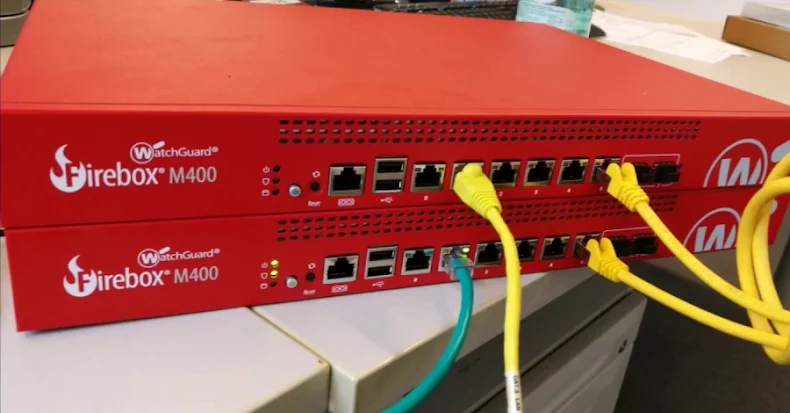
The U.S. Cybersecurity and Infrastructure Security Agency (CISA) has officially added a critical security flaw affecting WatchGuard Fireware to its Known Exploited Vulnerabilities (KEV) catalog. This move follows evidence of active exploitation of the vulnerability, underscoring the urgent need for organizations to patch their systems. The vulnerability, identified as CVE-2025-9242, carries a high CVSS score of 9.3, indicating its severe potential impact on network security.
The critical out-of-bounds write vulnerability impacts multiple versions of WatchGuard’s Fireware OS, specifically versions 11.10.2 through 11.12.4_Update1, 12.0 through 12.11.3, and the 2025.1 release. CISA’s advisory notes that the flaw resides within the OS’s iked process and could permit a remote, unauthenticated attacker to execute arbitrary code on vulnerable devices. This raises significant concerns for organizations relying on WatchGuard Firebox appliances for their network perimeter security.
Understanding the WatchGuard Fireware Vulnerability
The technical details of CVE-2025-9242 were initially disclosed by watchTowr Labs. According to their analysis, the vulnerability is rooted in a missing length check for an identification buffer used during the Internet Key Exchange (IKE) handshake. This oversight is particularly concerning because certificate validation, a crucial security step, occurs after the vulnerable code path has already been executed. As researcher McCaulay Hudson explained, this allows for the vulnerable code path to be reached even before authentication, significantly broadening the attack surface.
The implications of such a vulnerability are substantial. Successful exploitation could allow an attacker to gain unauthorized access to sensitive network resources, disrupt services, or install malicious software. The ability to execute arbitrary code means attackers could potentially control the affected device, using it as a pivot point to move deeper into a compromised network. This highlights the critical importance of timely patching and thorough security auditing for network infrastructure components.
Exploitation and Global Impact
While specific details regarding the methods and scope of current exploitation efforts remain limited, the inclusion of this vulnerability in the KEV catalog signals a clear and present danger. Data provided by the Shadowserver Foundation indicates a significant number of WatchGuard Firebox instances remain exposed to this flaw. As of November 12, 2025, over 54,300 instances were identified as vulnerable. This figure represents a decrease from a peak of 75,955 vulnerable instances observed on October 19, suggesting some organizations have begun to address the issue.
Geographically, the U.S. has the highest number of vulnerable devices, with approximately 18,500 instances reported. Other countries with a notable number of affected Firebox appliances include Italy (5,400), the United Kingdom (4,000), Germany (3,600), and Canada (3,000). These numbers underscore the global reach and impact of potential cyberattacks stemming from this vulnerability. Federal Civilian Executive Branch (FCEB) agencies in the U.S. have been specifically instructed by CISA to implement WatchGuard’s provided patches by December 3, 2025, indicating a prioritized remediation effort for critical infrastructure.
Broader KEV Catalog Updates
The addition of the WatchGuard Fireware vulnerability is part of CISA’s ongoing efforts to catalog and inform the public about actively exploited security weaknesses. In addition to CVE-2025-9242, CISA also recently added two other significant vulnerabilities to the KEV catalog. These include CVE-2025-62215, a flaw in the Windows kernel with a CVSS score of 7.0, and CVE-2025-12480, an improper access control vulnerability found in Gladinet Triofox, which carries a CVSS score of 9.1.
The exploitation of CVE-2025-12480 has been attributed to a threat actor tracked by Google’s Mandiant Threat Defense team as UNC6485. This highlights the sophisticated nature of threats targeting network infrastructure and applications. The inclusion of these diverse vulnerabilities emphasizes the need for a comprehensive vulnerability management strategy that addresses various types of software and operating systems. Staying informed about CISA’s KEV catalog and applying timely patches are crucial steps in maintaining robust network security and defending against emerging cyber threats.
Looking Ahead
The KEV catalog serves as a critical directive for organizations to prioritize patching efforts. For the WatchGuard Fireware vulnerability (CVE-2025-9242), the focus remains on ensuring that all affected versions are updated to secure configurations. The deadline set for FCEB agencies provides a benchmark, but all organizations utilizing WatchGuard Fireware should treat this as an immediate priority. The ongoing monitoring by organizations like Shadowserver Foundation will likely continue to track the global prevalence of vulnerable systems. Organizations should proactively check their WatchGuard Firebox status and consult WatchGuard’s official advisories for the latest information and recommended mitigation steps to protect against potential exploitation of this critical network security flaw.