


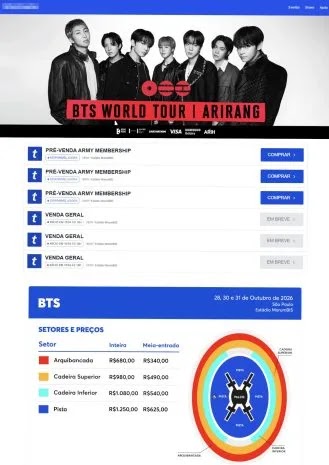
Cybercriminals are exploiting the immense excitement surrounding BTS’s highly anticipated ARIRANG world tour by deploying sophisticated fake ticket websites designed to defraud eager fans across nine countries. This widespread scam capitalizes on the global phenomenon of the K-pop group, leveraging the intense demand that typically follows prolonged breaks or major announcements, such as BTS’s return after members completed their mandatory military service.
Kaspersky researchers detailed the operation, identifying at least 10 fraudulent domains established in early April 2026. These sites meticulously mimicked official pre-sale pages for BTS concerts planned in Argentina, Brazil, Chile, Colombia, France, Mexico, Peru, Portugal, and Spain. The fraudulent platforms were so convincing in their design and purchasing journey that distinguishing them from legitimate ticket vendors proved difficult for the average user, indicating a well-coordinated and extensive attack.
How the BTS Ticket Scam Manipulates Victims at the Payment Stage
The operational effectiveness of this scam hinges on exploiting fan urgency and confusion, particularly in Brazil, where a novel pre-booking system was implemented for the ARIRANG tour. This system, designed to combat ticket scalping by requiring fans to reserve seats online before making an in-person payment at the box office, inadvertently created an environment ripe for exploitation. Scammers adeptly weaved this new procedure into their fraudulent scheme, adding a layer of perceived legitimacy for unsuspecting victims.
In Brazil, these fake ticketing pages often steered victims towards immediate payment via PIX, an instant payment system overseen by the Central Bank of Brazil. In some instances, the fraudulent sites would initially present a card payment option, only to subsequently generate error messages or cite overwhelming demand to pressure users into opting for PIX. Once the PIX transaction was completed, the funds were routed through money mule accounts, rendering recovery for the victims extremely difficult.
The attackers meticulously manufactured a sense of urgency throughout the purchasing process. Fake error notifications and simulated queue statuses were employed to create a fear of missing out, pushing fans to act impulsively to secure their desired concert seats. This tactic directly leverages the known rapid sell-out rates of legitimate BTS concert tickets. The scammers understood the psychological pressure fans experience and built their entire fraudulent experience around this anxiety.
To avoid falling victim to such concert ticket scams, fans are strongly advised to exercise caution. Always navigate directly to official ticketing platforms by typing the web address into your browser. Avoid clicking on links provided through social media, emails, or direct messages, as these are common vectors for fraudulent sites. Carefully scrutinize domain names for subtle alterations, such as extra dashes, unusual country codes, or character substitutions that mimic legitimate URLs.
Verify that websites include essential pages like a Privacy Policy and Terms of Use. While their presence does not guarantee legitimacy, their absence is a significant red flag. In the specific context of Brazil’s BTS pre-sale, any demand for online payment during the event’s initial booking phase should be treated as a major warning sign, given that official procedures mandate in-person transactions. Fans who have already made payments on suspicious sites should immediately contact their banks to report the fraud and, if credit card details were entered, request a card reissue. Enabling real-time banking alerts can also provide an early warning system for suspicious activity.