


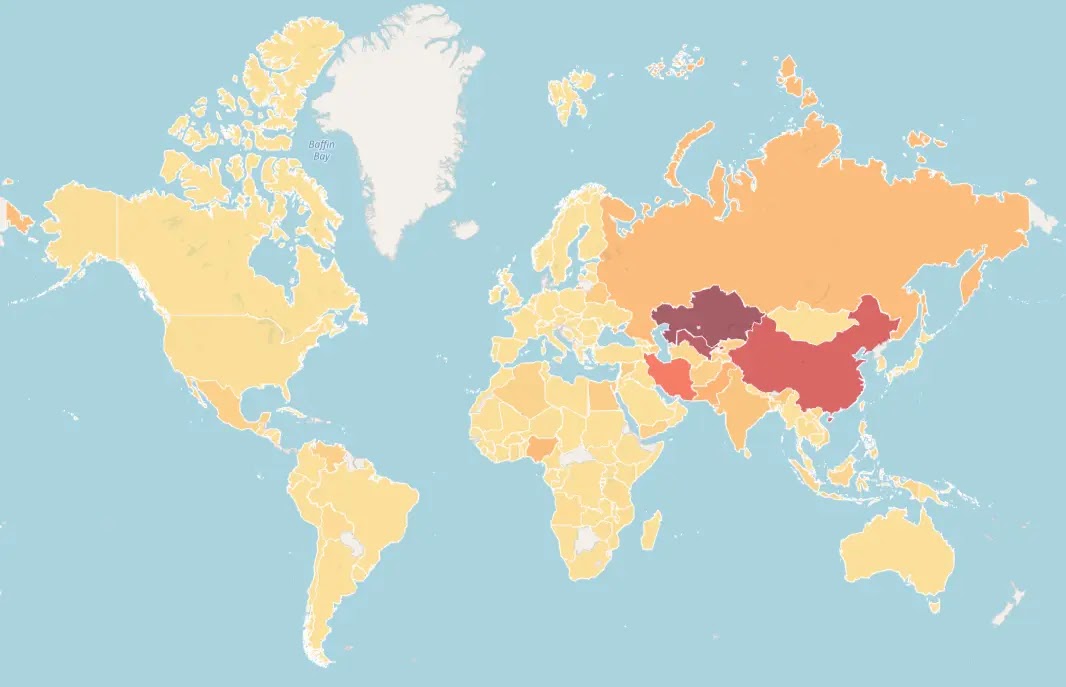
The Phorpiex botnet, active since 2011, has evolved into a sophisticated criminal enterprise, now capable of simultaneously deploying ransomware, executing mass sextortion email campaigns, and stealing cryptocurrency. This increasingly resilient malware, particularly its Twizt variant, presents a significant and evolving threat to individuals and organizations worldwide.
Recent analysis by Bitsight researchers reveals that Phorpiex leverages a hybrid command-and-control (C2) structure, combining traditional servers with a peer-to-peer (P2P) network. This dual approach ensures the botnet’s persistence, allowing it to continue operating even if individual servers are dismantled, as infected devices can communicate directly with each other. Currently, estimates suggest between 70,000 and 80,000 active devices are part of the botnet daily, with over 1.7 million unique IP addresses tracked in the past 90 days. The most heavily impacted regions include Iran, Uzbekistan, China, Kazakhstan, and Pakistan.
Phorpiex Botnet’s Multifaceted Criminal Operations
The Phorpiex botnet is not merely a conduit for a single type of attack; it orchestrates a trifecta of malicious activities. Its ransomware operations have been notably aggressive, with incidents documented in late 2025 where Phorpiex delivered the LockBit Black ransomware to corporate networks and Windows domains. Investigations confirmed this by verifying the target device’s presence within a domain environment before payload deployment.
Further compounding the threat, in early 2026, a variant resembling the Global ransomware family was deployed against targets in China. This campaign utilized a public IP-lookup API to ascertain the victim’s geographical location before initiating the download of the malicious file. Subsequently, a broader campaign extended this attack across 21 countries, including major economies like the United States, the United Kingdom, Germany, and France. Each spam campaign associated with these ransomware deliveries is estimated to reach between 2 million and 6 million email addresses.
In parallel with ransomware distribution, the same Phorpiex infrastructure is instrumental in conducting large-scale sextortion email campaigns. These emails falsely claim that hackers have recorded victims via their webcams while browsing explicit websites. The attackers demand a ransom, typically around $1,800 in Bitcoin, to prevent the alleged footage from being leaked. These deceptive messages have been in circulation since at least 2023, with the demanded ransom amount reportedly increasing over time, preying on fear and urgency.
Adding another layer to its criminal repertoire, the Phorpiex botnet actively engages in cryptocurrency clipping. This insidious method involves silently stealing cryptocurrency from infected devices in real-time. By intercepting and manipulating cryptocurrency transactions or directly accessing victim wallets, Phorpiex siphons digital assets without immediate detection, further enriching its operators.
How the Botnet Persists and Hides
Once a system falls victim to Phorpiex, the malware quickly establishes a persistent presence and employs sophisticated evasion techniques to remain undetected. It replicates itself into critical system directories and creates an autorun registry key, ensuring its automatic reactivation after every system reboot.
The malware’s propagation methods are also extensive. It actively spreads to removable USB drives and shared network folders. To facilitate this, Phorpiex drops a hidden executable file named DrvMgr.exe alongside a disguised shortcut file (.lnk). When this infected drive is connected to another machine, the shortcut is designed to launch Phorpiex, thereby spreading the infection further.
To circumvent security measures, Phorpiex exhibits a cunning approach to camouflage itself within the system. It silently adds itself to the Windows Firewall’s list of permitted programs, masquerading as a legitimate component under the name “Microsoft Corporation.” This tactic aims to deceive security software and administrators into recognizing it as a trusted system process.
Furthermore, the malware employs advanced techniques to obscure its malicious actions. It uses API hashing to conceal the Windows functions it calls during its execution, making it difficult for security tools to identify its true purpose. Additionally, Phorpiex builds suspicious strings within its memory dynamically, byte by byte. This method is designed to bypass static analysis performed by security scanners that look for known malicious patterns in code.
Communication and control within the botnet are secured through robust encryption. Every command issued to the botnet is encapsulated within a 256-byte RSA-encrypted header. This ensures that only the attacker, who possesses the decryption key, can issue valid instructions, thereby preventing unauthorized parties from gaining control over the compromised network.
Mitigation and Future Outlook
Organizations are strongly advised to implement several security measures to combat the Phorpiex threat. Blocking known Phorpiex C2 IP addresses is a crucial first step. Continuous monitoring for unexpected changes in autorun registry keys and implementing strict controls on USB device access on corporate machines can significantly limit the botnet’s ability to spread and persist.
Additional protective measures include disabling UPnP (Universal Plug and Play) on network routers, which can be exploited by malware. Maintaining up-to-date operating systems through regular patching is essential, as many infections exploit known vulnerabilities. Deploying layered email filtering solutions can also effectively reduce the risk of initial infection through phishing and spam campaigns.
All identified indicators of compromise (IOCs) and associated cryptocurrency wallet addresses are publicly available on Malware Bazaar, categorized under the tag dropped-by-phorpiex. This resource can aid security teams in detecting and responding to current and future Phorpiex activities. The evolving nature of the Phorpiex botnet, particularly its adaptable P2P communication and sophisticated obfuscation techniques, necessitates ongoing vigilance and proactive security strategies from cybersecurity professionals and end-users alike.