


A new ransomware strain, dubbed JanaWare, has emerged, specifically targeting computer users in Turkey. This sophisticated cyber threat leverages a customized version of the Adwind remote access trojan (RAT) to infiltrate systems, marking a significant development in the ransomware landscape for the region. The operation appears to be focused on individuals and small businesses, sectors often possessing less robust cybersecurity defenses.
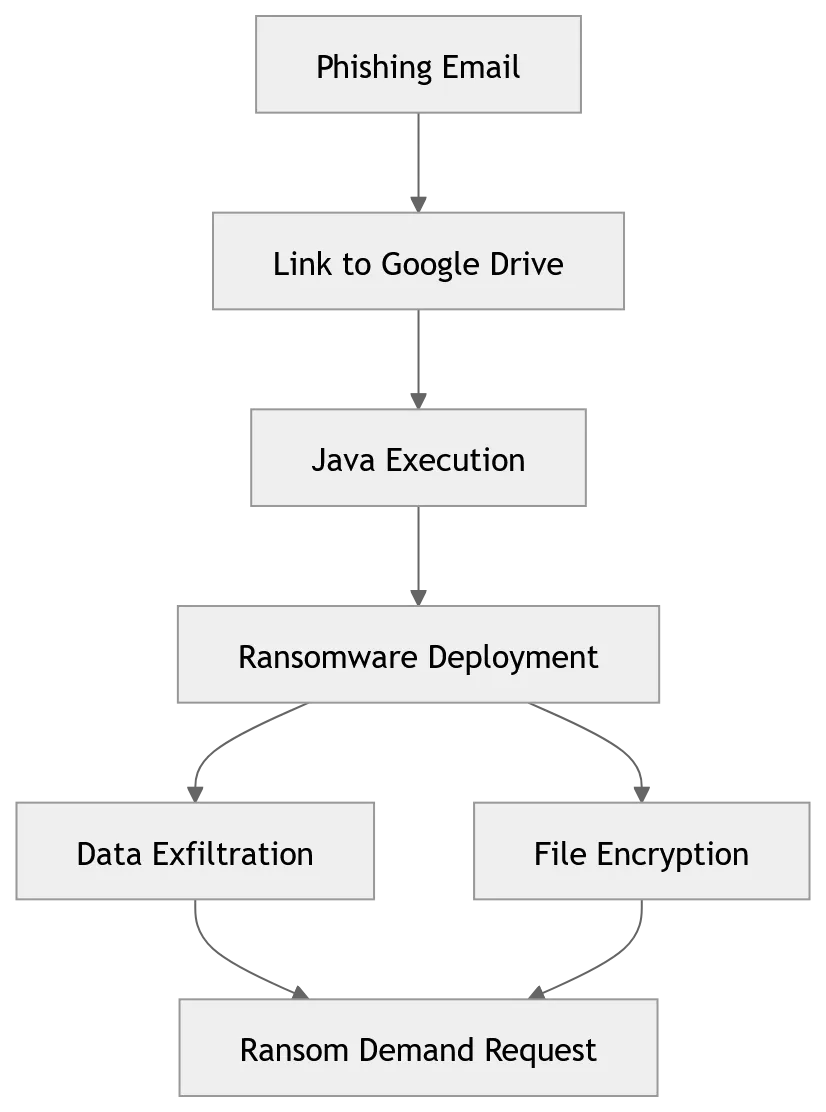
The attack chain typically commences with targeted phishing or social engineering tactics, employing deceptive emails with malicious attachments or links designed to resemble legitimate documents. Upon interaction, the customized Adwind RAT is silently deployed, granting attackers remote control. Crucially, at this initial stage, files are not yet encrypted; instead, the RAT conducts reconnaissance before triggering the JanaWare payload.
JanaWare Ransomware Leverages Customized Adwind RAT for Turkish Users
Acronis threat analysts first identified this emerging JanaWare activity while observing a series of Adwind-based intrusions exhibiting unusual behavior on Turkish endpoints. Their in-depth telemetry and sandbox analysis revealed that the Adwind samples used in this campaign contained novel modules and post-exploitation scripts not previously documented. Through meticulous correlation of network traffic, command-and-control (C2) instructions, and the final encryption routine, researchers confirmed the deployment of a new ransomware strain via the Adwind infrastructure.
Once JanaWare is successfully deployed, its impact is immediately apparent to victims. Critical documents, archives, images, and databases are encrypted and renamed with a campaign-specific extension. A ransom note is then dropped, providing victims with instructions for payment and emphasizing that file restoration is contingent on obtaining the attacker’s decryption key. Some observed ransom notes include language and pricing tailored to the Turkish market, indicating the attackers have conducted regional research to enhance their payment prospects.
This combination of localized tactics, selective targeting, and robust encryption poses a considerable threat to individuals and small organizations lacking comprehensive backup and recovery strategies. The observed attack flow illustrates a layered approach, where Adwind is used for persistent access and reconnaissance, enabling the operators to assess system value before deploying the JanaWare ransomware. This strategy allows for adaptability, permitting attackers to choose between data theft, ransomware deployment, or a combination of both, depending on the perceived profitability of the compromised system.
Infection Mechanism and Customized Adwind Use in JanaWare Attacks
The infection mechanism for JanaWare is heavily reliant on Adwind, but the version employed in these attacks exhibits significant customizations that expand its functionality beyond basic remote access. Following the victim’s engagement with a malicious attachment, the Adwind loader employs a multi-stage deployment process using obfuscated scripts to evade antivirus detection. The RAT is unpacked into memory, and persistence is established through various methods including registry entries, scheduled tasks, or user-level startup items. Acronis researchers noted that this customized Adwind variant periodically communicates with its C2 server to receive updated configuration data, which includes instructions on when and if to deploy the JanaWare ransomware module.
The infection chain demonstrates a clear handoff of execution from the initial malicious document to a script loader, which then retrieves the Adwind payload and establishes the communication channel back to the attackers. This modular design enables the threat actors to quickly rotate phishing lures while reusing the core RAT and ransomware components. Consequently, security measures focused solely on blocking suspicious attachments may fail to intercept later-stage traffic or payload delivery facilitated through Adwind’s C2 channel.
Once Adwind is operational, it systematically gathers system information, including hostname, operating system version, installed software, and a comprehensive list of user files and folders. This data is transmitted to the attacker for analysis. Based on this profile, the operators can then selectively deploy JanaWare by instructing the RAT to download and execute the ransomware from a remote server, often employing encrypted or encoded channels to circumvent inspection. Prior to initiating encryption, the ransomware process may attempt to disable local security tools, terminate backup-related services, and delete shadow copies to hinder recovery efforts. Throughout these stages, both the RAT and the ransomware employ detection-evasion techniques such as using common process names, basic anti-analysis checks, and environment awareness to minimize their visibility to automated analysis systems.
To mitigate the risks posed by JanaWare and similar RAT-based ransomware operations, organizations and individuals in Turkey are advised to prioritize robust email filtering, comprehensive user awareness training, and stringent controls on executing unknown scripts and attachments, particularly those presented in the Turkish language and business-themed formats. Endpoint protection solutions capable of detecting RAT behavior, suspicious C2 traffic, and sudden file encryption patterns are also crucial for interrupting the attack chain before JanaWare can execute. Maintaining regular, offline backups, ensuring operating systems and applications are consistently patched, and closely monitoring remote access tools can significantly limit the damage in the event of a compromise, even when attackers attempt to conceal their activities behind customized Adwind components.