


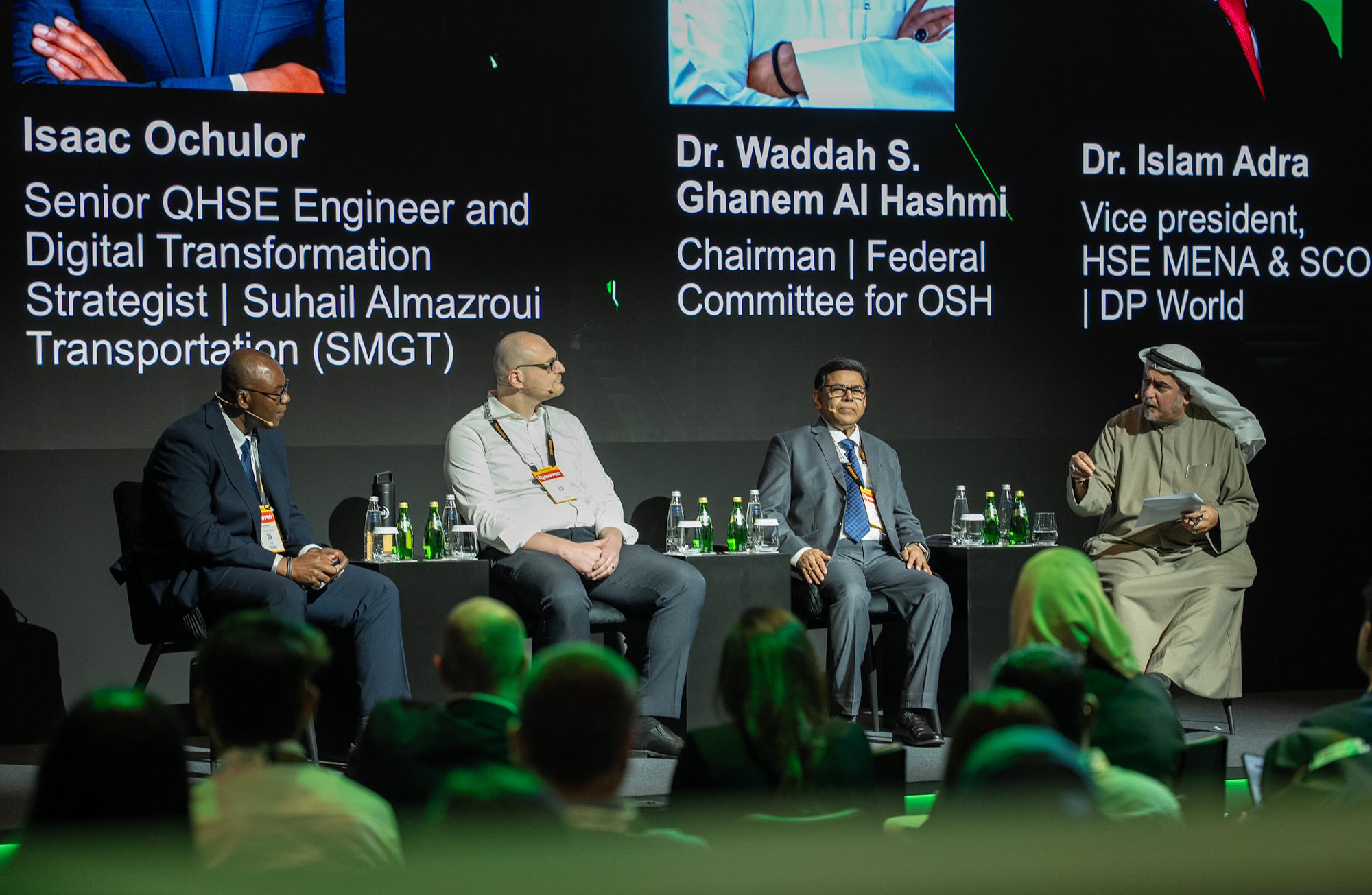
Senior leaders from defense, intelligence, border security, and critical infrastructure sectors convened at Intersec 2026 to address crucial challenges in maritime border security for Gulf states. The closed-door strategic roundtable, hosted by Kearney in partnership with Intersec, focused on strengthening regional maritime defenses amidst escalating geopolitical, humanitarian, and technological pressures.
The session, titled ‘Governing the Blue: Intelligence-Led Security for Gulf Maritime Boundaries,’ brought together operational commanders, policymakers, and technology leaders. Participants aimed to align governance models, intelligence structures, and digital capabilities to better manage the region’s increasingly complex maritime domain, recognizing its intersection with sovereignty, economic continuity, and humanitarian responsibilities.
Strengthening Maritime Border Security Through Intelligence
The roundtable highlighted a significant shift within the Gulf region’s approach to maritime security. With ports, special economic zones, and energy corridors facing persistent strain, participants agreed on the necessity of moving from reactive security postures to intelligence-led operations. This approach emphasizes proactive guidance for both intelligence gathering and subsequent actions.
Ankit Gandhi, Partner at Kearney Middle East & Africa – Aerospace, Defense and Security Practice, who moderated the discussion, stated that maritime security challenges in the Gulf are no longer isolated incidents but continuous and converging issues. The key takeaway, according to Gandhi, is that intelligence effectively drives impact only when it is institutionally embedded, operationally trusted, and digitally connected, underscoring the importance of integrated security solutions.
Addressing Humanitarian Needs and Inter-Agency Coordination
A crucial aspect of the discussion emphasized that humanitarian response and maritime migration must be treated as integral operational realities, not as secondary considerations. Participants noted that vulnerabilities in safeguarding often emerge at inter-agency handover points.
This observation reinforced the critical need for clear lines of authority, shared risk pathways, and comprehensive end-to-end ownership across all maritime operations to ensure efficient and effective responses.
Technology’s Role and Future Implications
From a technological standpoint, delegates discussed aligning investments with clearly defined operational Key Performance Indicators (KPIs). Emerging trends, including the deployment of space-based assets and open-source intelligence capabilities, were also examined for their potential to enhance maritime intelligence gathering and analysis.
The forum identified secure communications and a standardized data fabric as essential enablers for lawful and auditable information sharing among national and regional stakeholders. Gandhi further commented that technological capabilities must be aligned with decision-making authority, especially in hybrid threat environments. He added that developing these capabilities in silos is not viable and that cyber resilience is fundamentally an organizational design challenge, not solely a technical one.
The insights generated from this roundtable will be compiled into a comprehensive white paper by Kearney. This document is expected to outline a capability framework for intelligence-led maritime security specifically tailored to the operational realities of the Gulf. The paper aims to support policymakers and operators in modernizing maritime governance and command models, guiding future advancements in maritime safety and security.
Dishan Isaac, Show Director of Intersec at Messe Frankfurt Middle East, noted that maritime security is a strategic priority for the region, demanding candid, senior-level dialogue that extends beyond technology demonstrations. Isaac highlighted Intersec’s role as a neutral platform where government, industry, and international experts can converge on governance, leadership, and operating models, fostering collaborative frameworks for regional implementation.
The upcoming white paper from Kearney is anticipated to provide concrete recommendations for improving Gulf maritime border security. Further details on the timeline for its release are expected soon, offering a roadmap for enhanced regional maritime governance and operational effectiveness.