


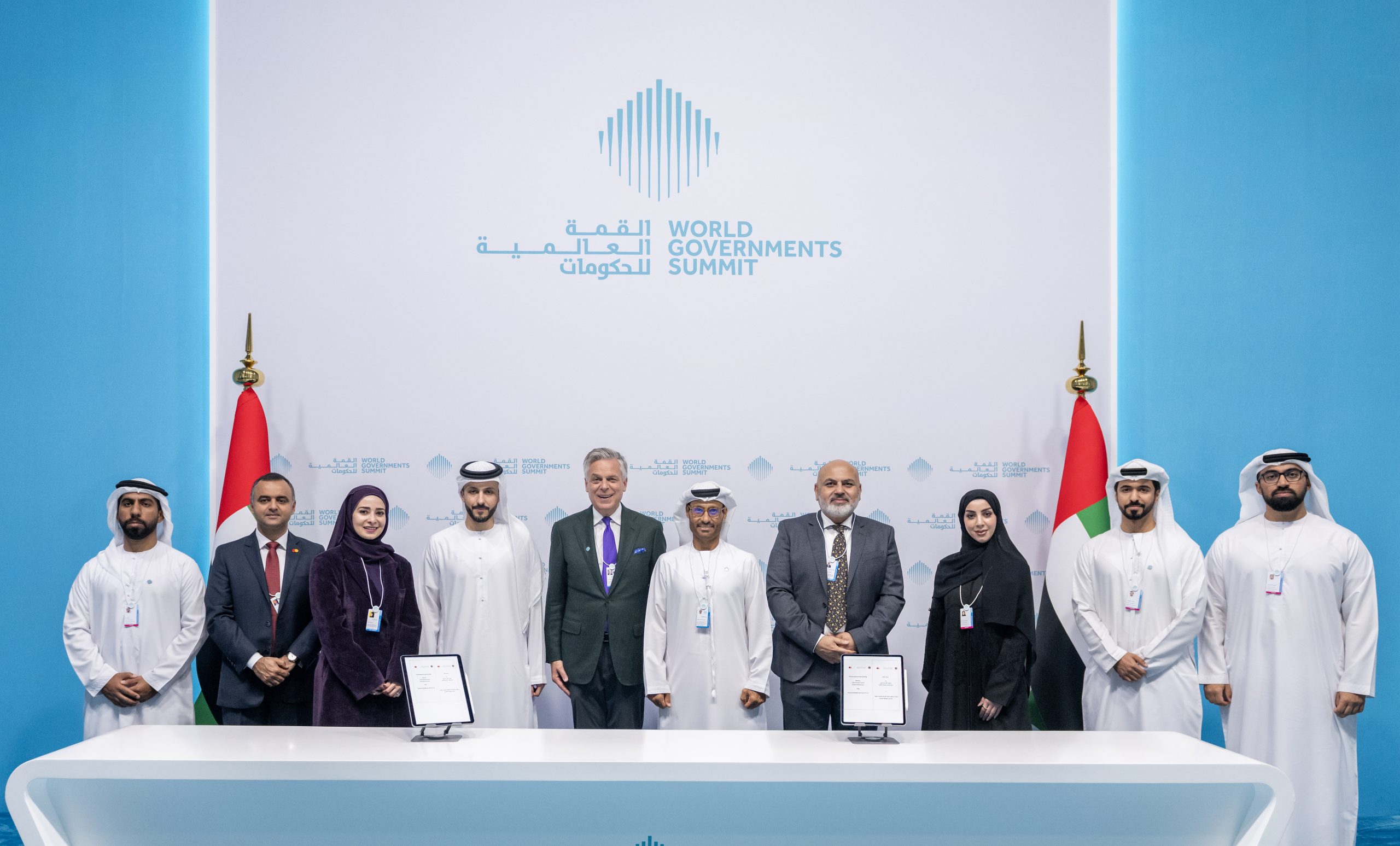
Mastercard has entered a major cybersecurity partnership with the United Arab Emirates, joining forces with the UAE Cyber Security Council (CSC) to boost the nation’s digital defences at a time when cyber risks are escalating at an unprecedented speed. This collaboration is expected to leverage global expertise and intelligence sharing to counter increasingly sophisticated AI-driven threats.
The agreement was announced on the sidelines of the World Governments Summit (WGS) 2026 in Dubai and formalises a memorandum of understanding (MoU) between the two organisations. Under the partnership, Mastercard and the CSC will collaborate on global best practice, policy development and intelligence-sharing, while also working to strengthen the UAE’s overall cyber resilience. A joint report mapping the UAE’s current cyber threat landscape was also released as part of the announcement.
UAE and Mastercard Forge Cybersecurity Pact Amid Rising AI Threats
The newly released UAE Cyber Threat Insights Report highlights an increasingly complex and aggressive threat ecosystem. Malicious actors are prioritising critical sectors and high-value national assets, deploying more sophisticated methods and exploiting emerging technologies such as artificial intelligence. This necessitates a collaborative and forward-thinking approach to national cybersecurity.
“As the UAE advances its digital transformation, exposure to cybercrime grows, with risks to critical sectors escalating exponentially, driven by AI and other threats,” stated H.E Mohamed Alkuwaiti, Head of Cyber Security for the UAE Government. The CSC and Mastercard share a commitment to building a secure digital future, according to Alkuwaiti.
The partnership aims to leverage Mastercard’s extensive global experience to bolster the UAE’s cybersecurity framework. This initiative seeks to enhance the country’s readiness to combat increasingly sophisticated cyber-attacks and consolidate its leadership in the field of digital security.
The Evolving Cyber Landscape and AI’s Dual Role
Artificial intelligence is enabling cybercriminals to scale their attacks more rapidly, but it is also proving to be a powerful tool for defence. The UAE Ministry of Interior has already embedded AI and advanced analytics into its Cybercrime Combating Department. This integration allows investigators to process vast volumes of digital evidence more efficiently, identify links between cases, and trace the origins of cyber incidents faster than traditional manual methods.
Leading technology providers are also adopting similar AI-driven approaches. For instance, Oracle employs AI-based investigation tools to assist analysts in gathering evidence, connecting related cases, and identifying high-risk activity, as noted in the report.
The use of AI in cybersecurity is becoming increasingly widespread across industries. A recent PYMNTS Intelligence study indicated that 55 percent of companies are now utilizing AI-powered cybersecurity measures. The report suggests that when used responsibly, AI enhances visibility and speed without replacing sound governance or accountability, offering a vital advantage over traditional, checklist-driven security models.
The Global Scale of Cybercrime and Mastercard’s Contribution
The global challenge posed by cybercrime is considerable. Cybersecurity Ventures estimates that cybercrime will cost the world $15.6 trillion by 2029, a figure comparable to the world’s third-largest economy. Within the UAE, the CSC reports that the nation faces over 200,000 cyberattacks daily, with a significant portion targeting government entities.
Mastercard asserts its strong position to support the UAE in addressing these evolving threats. Since 2018, the company has invested $10.7 billion in cybersecurity-related acquisitions and solutions. Over the past decade, its AI tools have successfully prevented $70 billion worth of fraudulent transactions globally.
“Our collaboration will help CSC assess emerging cyber-risks and protect both people and organisations against them,” said Jon M. Huntsman, Jr., Mastercard’s Vice Chairman and President for Strategic Growth. He described the MoU as reinforcing Mastercard’s role as a trusted partner, technology provider, and policy advisor to the UAE government.
The next steps for the partnership will likely involve the implementation of joint initiatives and the exchange of threat intelligence. The effectiveness of this collaboration will be crucial in determining the UAE’s ability to stay ahead of the rapidly evolving cyber threat landscape, particularly as AI continues to reshape both offensive and defensive capabilities in cybersecurity. Further details on specific programs and timelines are anticipated in the coming months.