


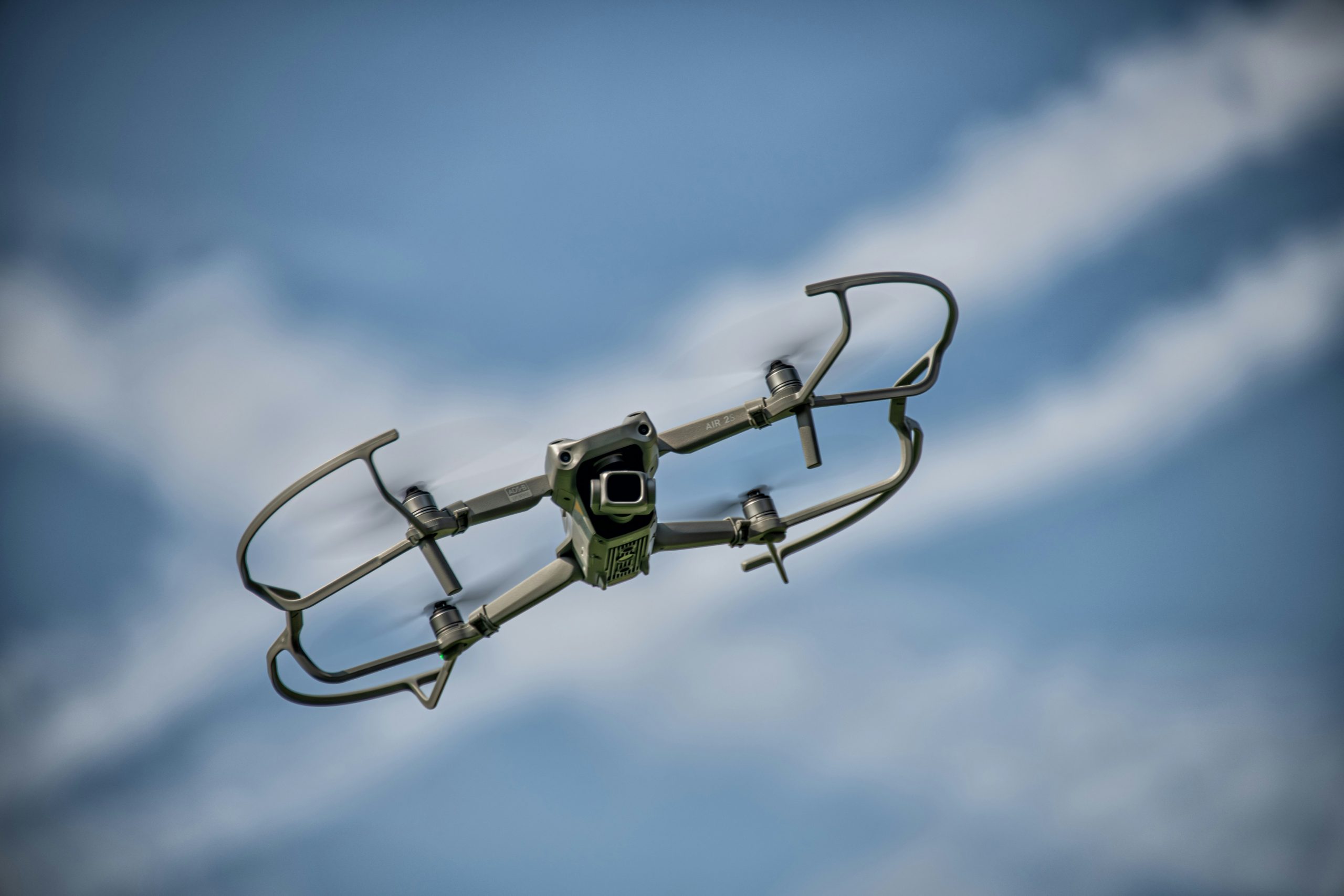
Demand for autonomous aerial robots across the Middle East is forecast to surge from USD 487.2 million in 2025 to USD 1.54 billion by 2035, according to new industry analysis.
The projected rise, equivalent to a 216.7 percent growth, is being driven by defence modernization, expanding surveillance needs, and increasing investment in smart-city and critical-infrastructure protection.
Middle East Demand for Autonomous Aerial Robots Set to Triple by 2035
The region is identified as one of the world’s most active adopters of autonomous flight systems. Militaries across the Middle East are pursuing platforms that offer extended endurance, reduced personnel risk, and advanced real-time intelligence capabilities.
Consequently, countries across the Gulf are accelerating their purchases of these advanced systems, as border security, airspace monitoring, and multi-domain defence operations are increasingly prioritized as national security imperatives.
Projected Growth by Country
Recent market forecasts indicate a significant compound annual growth rate (CAGR) for autonomous aerial robots in several key Middle Eastern nations. These projections include Qatar at 15.4 percent, Israel at 14.8 percent, and the United Arab Emirates at 13.9 percent.
Saudi Arabia is expected to see a CAGR of 13.3 percent, while Kuwait, Bahrain, and Oman are projected to experience growth within the 11–13 percent range. These figures underscore a widespread regional commitment to integrating advanced unmanned capabilities.
Military Dominance and Evolving Applications
Military applications are anticipated to constitute a substantial portion of the total Middle Eastern demand, accounting for an estimated 67.4 percent in 2025. These applications are critical for reconnaissance, target tracking, early-warning missions, and providing high-risk tactical support.
Within the military sector, fixed-wing systems are expected to dominate, representing 58.2 percent of the total demand. This preference highlights the need for long-endurance, long-range surveillance and strike capabilities.
Emerging Civilian and Commercial Uses
However, the use of autonomous aerial vehicles is also seeing significant growth in civilian and commercial sectors. While the defence sector currently leads, other industries are beginning to leverage the capabilities of these advanced machines.
The report also notes the increasing influence of international manufacturers. Turkish UAV manufacturer Baykar, for instance, is highlighted as a significant player in the Middle East, particularly with its Bayraktar TB2 unmanned combat aerial vehicle, which has become a sought-after system in the region.
Future Outlook and Uncertainties
The continued development and adoption of autonomous aerial robots in the Middle East are expected to be shaped by ongoing geopolitical dynamics and technological advancements. The region’s commitment to defence modernization and smart infrastructure suggests a sustained demand for these technologies.
Future analysis will likely focus on the integration of artificial intelligence into these platforms and the regulatory frameworks that will govern their expanded use. The pace of adoption in non-military sectors and potential shifts in international supply chains may also present new dynamics in the coming years.