


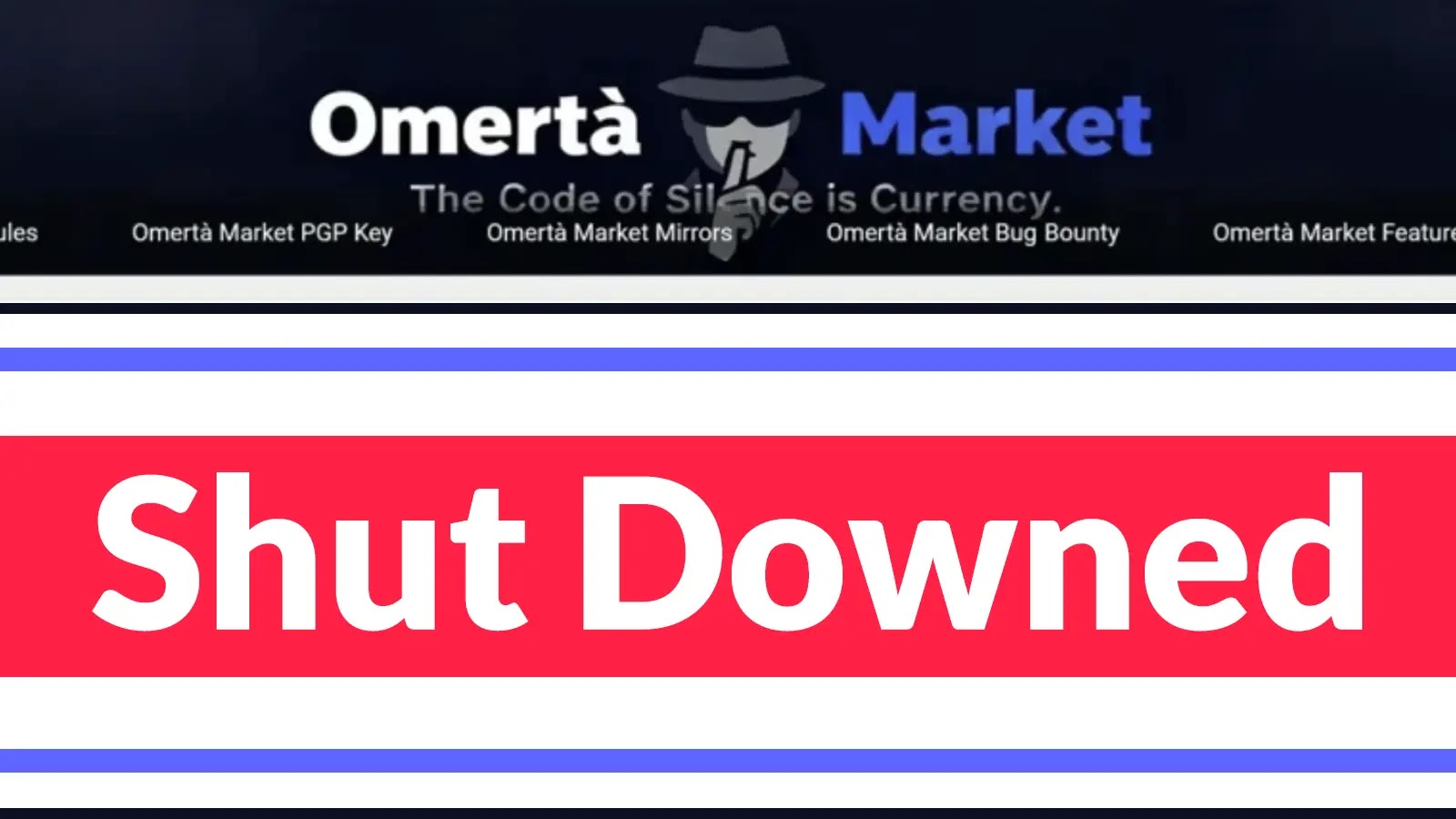
Omertà Market, a newly launched dark web marketplace, has been forced to shut down after just two weeks due to the public leak of its actual server IP addresses. The marketplace, which opened on November 21, 2025, with promises of unparalleled stability and security, was quickly compromised by a security researcher. This incident highlights the persistent vulnerabilities within dark web operations and the critical importance of robust operational security.
The exposure was reportedly orchestrated by a security researcher operating under the handle valor98, who detailed the marketplace’s security failures on the Dread forum. The leak effectively nullified Omertà Market’s anonymity, revealing a significant lapse in fundamental security practices. This incident draws parallels to the recent exposure of the LockBit 5.0 ransomware operation, where similar operational oversights led to the identification of its core infrastructure. Analysts suggest that inexperienced dark web operators may be prioritizing rapid profit over the necessary technical rigor, leaving both themselves and their users exposed to data breaches and law enforcement action.
Technical Exposure and Infrastructure Flaws Undermine Omertà Market
The technical analysis of Omertà Market’s collapse revealed critical architectural flaws. Valor98 identified that Omertà Market shared an Autonomous System Number (ASN) with two other less established marketplaces, Orange Market and Changa Store. This suggests a shared hosting environment or reliance on a common infrastructure provider, a considerable security risk for any hidden service aiming for anonymity.
Further investigation pinpointed specific IP address patterns that facilitated the correlation between these services, thereby dismantling their cloaking mechanisms. For instance, Omertà was reportedly located at a specific IP range, while Orange Market utilized another in close proximity. This proximity made it easier for researchers and potentially law enforcement to link the disparate services and their underlying infrastructure.
Community scrutiny also uncovered the rudimentary nature of Omertà Market’s codebase. Despite claims of an in-house, custom-built environment, technical indicators pointed towards the use of common frameworks such as Laravel or Python-based Flask/Django setups, often utilizing Jinja2 templates and Gunicorn servers. Critics have described this development approach as “intuitive coding,” suggesting a potential reliance on AI-assisted code generation without a comprehensive understanding of the security implications. This methodology resulted in a fragile system that was unable to withstand basic security probes, rendering the marketplace’s proclaimed security features ineffective and leading to the swift shutdown of Omertà Market.
The rapid collapse of Omertà Market serves as a stark reminder of the challenges inherent in maintaining secure dark web operations. The reliance on superficial security measures and the apparent prioritization of quick financial gains over technical diligence continue to be recurring themes in the ephemeral world of illicit online marketplaces. The incident also underscores the ongoing role of independent security researchers in identifying and exposing vulnerabilities within these hidden networks. The future trajectory of Omertà Market’s operators remains uncertain, but the incident is likely to fuel further investigations by cybersecurity professionals and law enforcement agencies.