


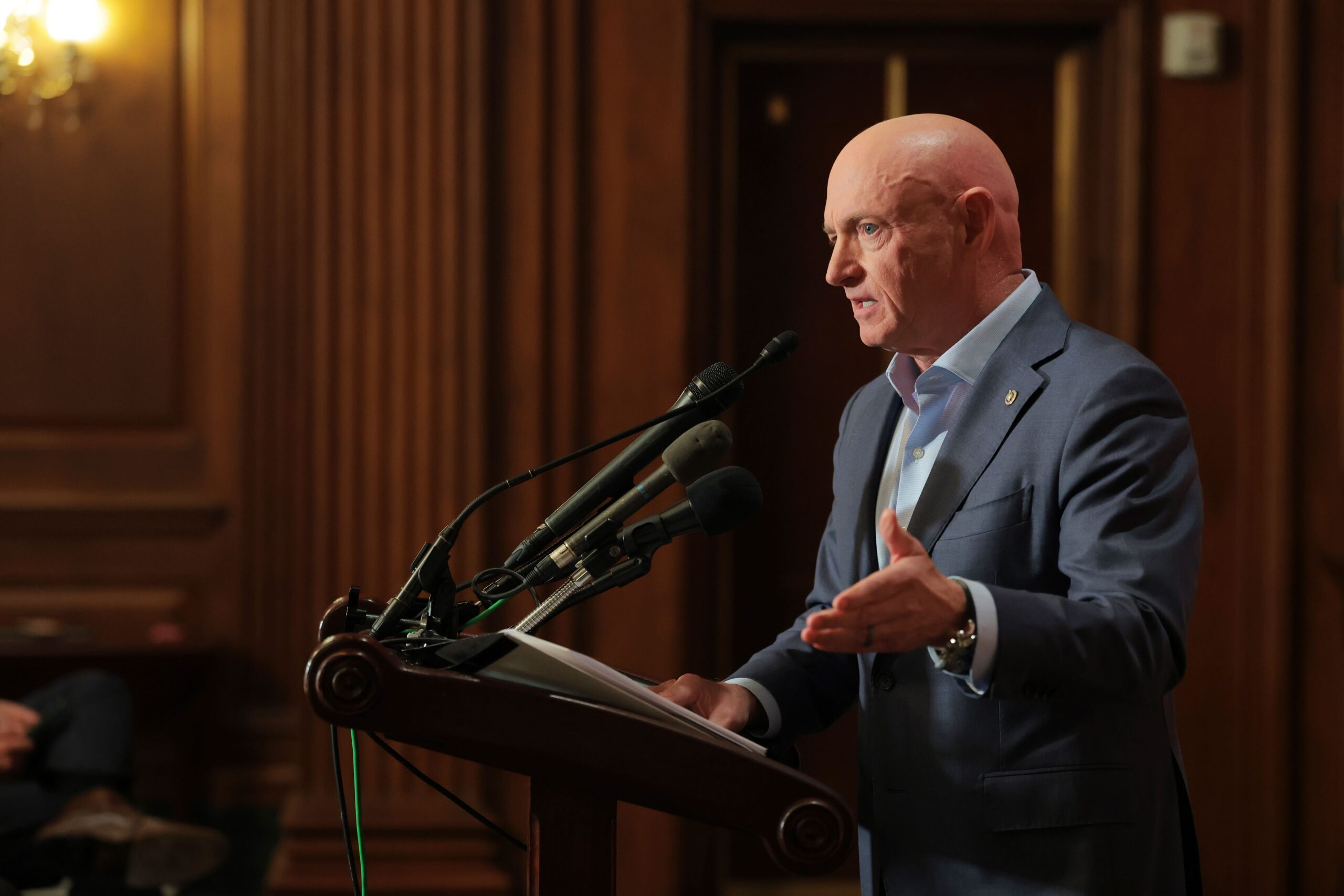
Sen. Mark Kelly, D-Ariz., is advocating for robust safeguards and ethical considerations in artificial intelligence development, emphasizing that U.S. AI systems must embody American values. Speaking Thursday at the Center for American Progress think tank, Kelly stressed the need for significant investment in AI infrastructure, including data centers, water, and electricity, to support the burgeoning industry. However, he also underscored the critical importance of establishing clear, enforceable standards to ensure AI respects civil rights, protects privacy, and avoids leaving individuals behind.
Kelly’s call for strong governance aligns with his broader strategy for American AI leadership, which he outlined in September. This strategy includes proposals for a federal trust fund, financed by AI industry profits, aimed at training Americans for the evolving AI economy. He believes that embedding American values into AI technology and its developmental standards is crucial for maintaining global influence and preventing the adoption of authoritarian principles.
Prioritizing American Values in AI Development
Senator Kelly argued that strong technical guardrails are paramount. These safeguards are essential not only for ensuring the safety of AI for businesses and individuals, preventing misuse like widespread discrimination or scams, but also for differentiating U.S. AI from that developed in competing nations such as China and Russia. He views ethically developed AI as a key component of American competitiveness.
Kelly’s proposed strategy for AI systems includes rigorous testing and evaluation for potential misuses. This evaluation process would involve third-party entities and government agencies. Additionally, the strategy advocates for consistent standards and regulations, ongoing monitoring for harms after a model’s release, and a collaborative public-private partnership between AI companies and society to develop and implement safeguards.
“We have to strengthen our infrastructure and we have to support smart, responsible laws that keep this technology safe and true to our values, because American leadership doesn’t happen by accident,” Kelly stated, highlighting the proactive approach needed for maintaining U.S. leadership.
These sentiments emerge at a time when the regulatory landscape for AI is shifting. The Trump administration has largely paused the Biden administration’s initiatives aimed at regulating AI companies and promoting stronger technical guardrails. These guardrails are designed to prevent AI models from misleading users, providing harmful instructions, or exacerbating mental health crises. Within the Republican-controlled Congress, there has been a noticeable reluctance to impose new rules on the AI industry, which has attracted substantial investment from the American financial sector. Republican leaders and business lobbying groups argue that such restrictions could hinder American companies’ global competitiveness.
When questioned about how the U.S. could garner international support for its AI standards, given the diverse regulatory environments globally, Kelly suggested that swift action and early leadership in setting global standards are key. He believes that by establishing the rules first, the U.S. could encourage allies to operate within its established framework, thereby leveraging its influence.
Economic Risks of AI Investments
While advocating for increased U.S. investment in AI, Kelly also cautioned policymakers about a potential worst-case scenario: that the technology may not live up to the hype. He warned that the massive, debt-fueled investments being made by U.S. companies could become unsustainable if long-term profits do not materialize. Kelly emphasized that the success of AI is critical not only for its potential technological advancements but also because of the substantial capital already invested.
Experts, including independent journalist Ed Zitron and publications like The Wall Street Journal and The New York Times, have pointed to concerning trends over the past year. Large segments of the U.S. economy are reportedly supported by multi-billion dollar investments in AI infrastructure, encompassing large language models, data centers, computer chips, and energy resources. These investments are predicated on a significant surge in consumer demand for AI. However, if this demand fails to materialize as anticipated, experts foresee potentially severe downstream economic repercussions.
Kelly did not dismiss the possibility of widespread economic damage should America’s AI investments fall short of expectations. He suggested that the potential economic fallout for American consumers could be more significant than the downturn experienced during the Great Recession of 2008. “And if there’s a big bubble and that bubble bursts in a really, really bad way, it’s going to be harmful to the broader economy,” he said. “It might make the downturn in 2008 look like a party.”
Moving forward, the focus will likely remain on the ongoing debate surrounding AI regulation and the U.S.’s role in shaping global AI standards. Future policy decisions and potential bipartisan cooperation on AI governance will be critical to watch, alongside the actual market adoption and profitability of AI technologies, which will ultimately determine the economic stability of these massive investments.