


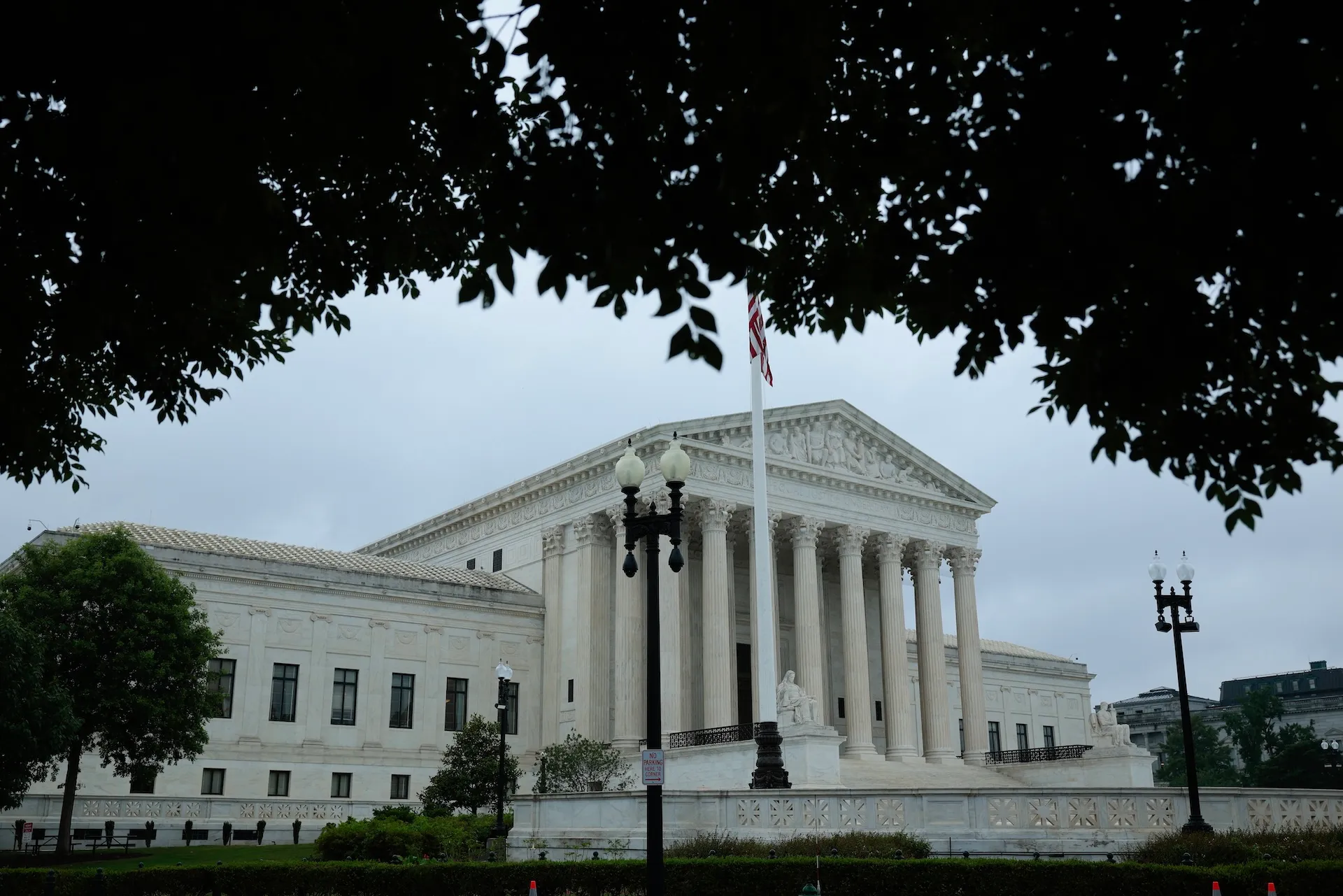
The Supreme Court ruled Monday that collecting phone location data from a geographic area constitutes a Fourth Amendment search, a decision with significant implications for digital privacy. The 6-3 ruling in Chatrie v. The United States was hailed by privacy advocates as a major victory under the Fourth Amendment, while dissenting justices warned of the ruling’s potential to broadly reshape Fourth Amendment doctrine.
The case involved Okello Chatrie, who challenged the police’s use of a geofence warrant to obtain Google’s location data from a specific area in connection with a bank robbery. Although the Supreme Court did not rule on the validity of the warrant in Chatrie’s specific case, it established that the Fourth Amendment protects this type of data collection, potentially extending protections to other future digital surveillance methods.
Supreme Court Affirms Fourth Amendment Protections for Location Data
At the heart of the debate was whether the broad collection of data constitutes a search under the Fourth Amendment’s prohibition against “unreasonable searches and seizures.” A key question was whether individuals retain Fourth Amendment protections for information they voluntarily provide to third-party companies, a concept known as the “third-party doctrine.”
The majority concluded that cell phone location data is analogous to cell-site location information previously addressed in Carpenter v. United States (2018). In that earlier decision, the Court similarly determined that the government’s acquisition of such data qualifies as a Fourth Amendment search.
Majority Opinion Emphasizes Evolving Technology and Privacy Expectations
Writing for the majority, Justice Elena Kagan stated that new technologies should not diminish an individual’s reasonable expectation of privacy from government surveillance. Kagan emphasized that individuals have a reasonable expectation of privacy in their cell phone’s location records and that law enforcement’s demand for this information infringes upon this constitutionally protected interest, even when obtained from a third-party company for a limited time.
Justice Neil Gorsuch, in a concurring opinion, suggested that the location history data should be considered personal property protected under the Fourth Amendment’s provisions regarding “papers” and “effects.”
Dissenting Justices Raise Concerns About Broad Implications
Justice Samuel Alito, writing for the dissenting justices, argued that the majority had extended protections beyond the scope established in the Carpenter decision. Alito expressed concern that the ruling’s broad pronouncements would create significant disruption for Fourth Amendment jurisprudence, suggesting that the Court would be “cleaning up debris for the foreseeable future.”
Law professor Andrew Ferguson of George Washington University noted that the ruling is significant for Fourth Amendment privacy, even if law enforcement might find alternative ways to obtain warrants. He described the decision as a major win and a significant step toward updating the Fourth Amendment for the digital age.
The American Civil Liberties Union also welcomed the ruling, with senior counsel Brett Max Kaufman stating that the decision provides essential protections against invasive government searches of personal information. He added that while Google has altered its practices regarding location data requests, similar “reverse searches” of sensitive data held by other companies remain a threat to privacy. The ruling serves as a notice to law enforcement and courts that new technology does not create surveillance loopholes and that strict adherence to Fourth Amendment protections is required.
The Supreme Court’s next step is to address the specific validity of geofence warrants in future cases. The full impact of this decision on digital surveillance practices and the interpretation of the Fourth Amendment in the context of evolving technology remains to be seen.