


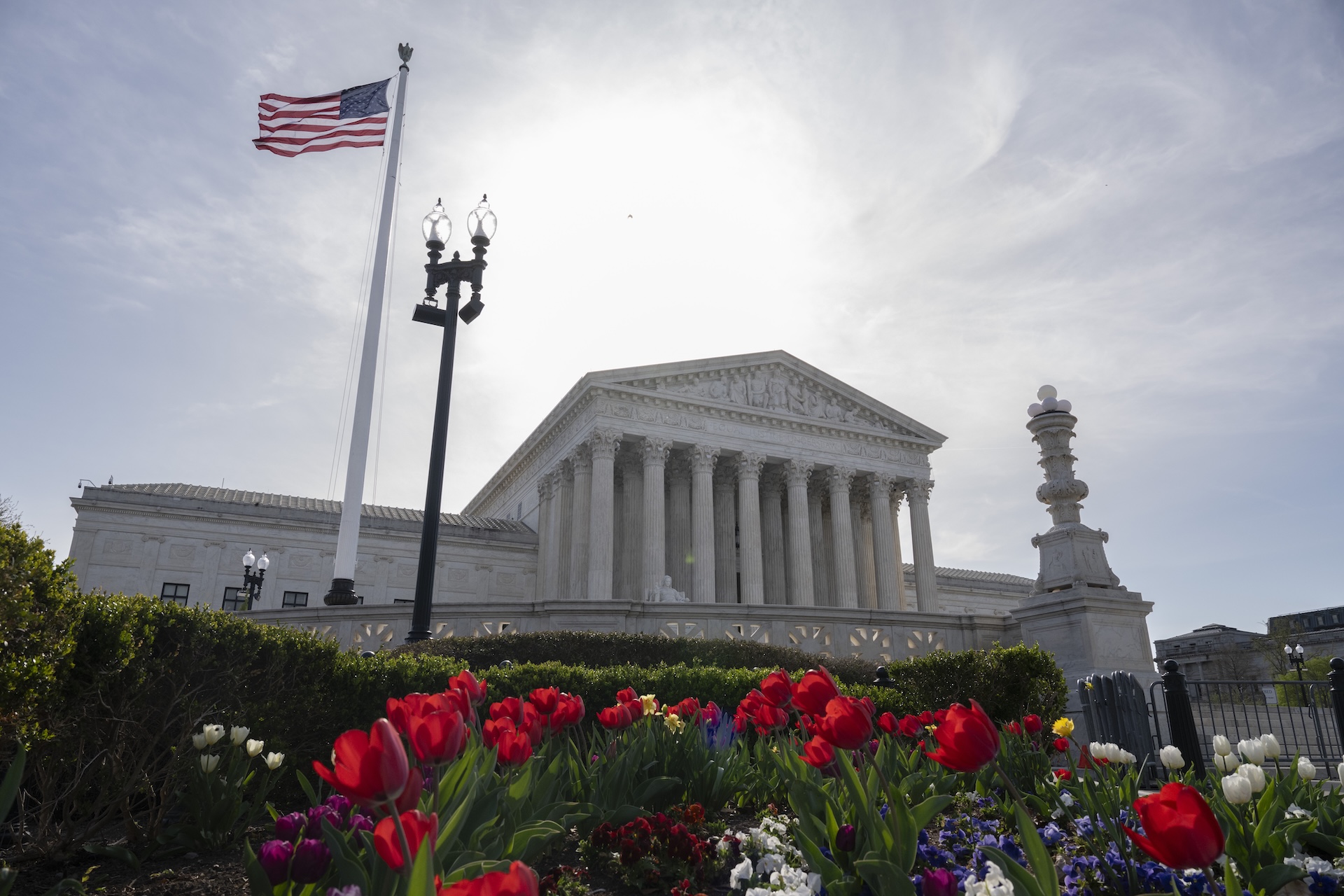
The Supreme Court will hear oral arguments Monday in Chatrie v. The United States, a case that could significantly impact the government’s ability to obtain bulk digital data using a single warrant. This marks a rare instance of the nation’s highest court deliberating on digital rights and the Fourth Amendment in the context of modern technology.
At the heart of the case are “geofence warrants,” a law enforcement tool that compels companies to disclose user data within a specified time and geographic area. This is the first major Fourth Amendment case the Supreme Court has heard since 2018, despite the rapid evolution of digital privacy concerns.
Understanding Geofence Warrants and Their Implications
Geofence warrants allow law enforcement to request data from tech companies, such as Google, about all devices that were present in a defined area during a specific timeframe. Initially, police used this information to identify potential suspects by cross-referencing the data with other investigative leads.
“It’s a really interesting question about a law enforcement tool that would have been unimaginable a few decades ago, where you can basically look at potentially every phone, for example, that passed through a particular area in a particular window,” said John Villasenor, a law professor at UCLA and nonresident senior fellow at the Brookings Institution.
In the case of Okello Chatrie, convicted of bank robbery, police utilized a geofence warrant to obtain Google location data from a one-hour period over a 17.5-acre area. Subsequent refinement of this data helped identify Chatrie as a suspect.
Coalition of Support for the Petitioner
A notable aspect of Chatrie v. The United States is the broad coalition supporting the petitioner, Okello Chatrie. Both conservative and liberal civil liberties advocates have filed amicus briefs in favor of Chatrie, suggesting widespread concern about the scope of these warrants.
This broad support contrasts with the U.S. government’s position, which faces fewer amicus briefs arguing on its behalf. The differing perspectives highlight the complex legal and ethical questions surrounding digital surveillance.
Concerns Across the Political Spectrum
Concerns about geofence warrants extend across the political spectrum in Congress. Democrats have expressed worries about potential implications for reproductive rights, while Republicans have voiced concerns regarding their use in tracking individuals connected to the January 6, 2021 Capitol insurrection.
These bipartisan concerns underscore the potential for geofence warrants to impact various aspects of citizens’ lives and civil liberties.
Legal Precedents and Evolving Technology
Courts have shown division on the legality of geofence warrants. While a Virginia court in Chatrie’s case found a similar warrant unconstitutional for lacking specificity and probable cause for all users, it still allowed the evidence, citing law enforcement’s good-faith belief in its constitutionality.
The U.S. government argues that individuals have a limited expectation of privacy in information disclosed to third parties and that Google’s data collection is akin to identifying physical markers of presence. They contend that people generally have no privacy interest in data shared with third parties, a stance that echoes the “third-party doctrine.”
However, the Supreme Court’s 2018 ruling in Carpenter v. The United States limited the third-party doctrine concerning cell site location information, requiring warrants for such data. This precedent is central to the arguments in Chatrie v. The United States.
Additionally, Google has ceased storing sensitive location data in the cloud, moving it directly to user devices. Advocates for Chatrie argue this shift amplifies the potential for broader implications regarding financial records, search history, and chatbot interactions if geofence warrants are broadly permitted.
The “Good Faith” Exception and Future Uncertainty
Legal experts suggest the Supreme Court could provide clarity on the “good faith” exception, a doctrine that has allowed lower courts to avoid constitutional rulings. However, there is also a possibility that the Court may not reach a definitive conclusion on all the issues.
“We think it’s important that courts get it right and that, among other things, courts recognize that we have a property interest in many of our digital records,” said Brent Skorup, a legal fellow at the Cato Institute. “If the government can get those digital records without a warrant, that renders the Fourth Amendment pretty empty and we’re not secure in our privacy and traditional rights to having control of our private papers and effects.”
While some are optimistic due to the Carpenter ruling, the replacement of three justices since that decision introduces an element of uncertainty. The increasing complexity of digital privacy cases like Chatrie v. The United States before the Supreme Court may also reflect the court’s ongoing efforts to establish a consensus on these evolving legal areas.
Google, while not taking a side in Chatrie’s specific case, has urged the Court to protect digital documents stored remotely, warning of warrantless surveillance of vast amounts of personal data. The Court’s decision is expected to set a significant precedent for digital privacy and government access to information in the digital age.