


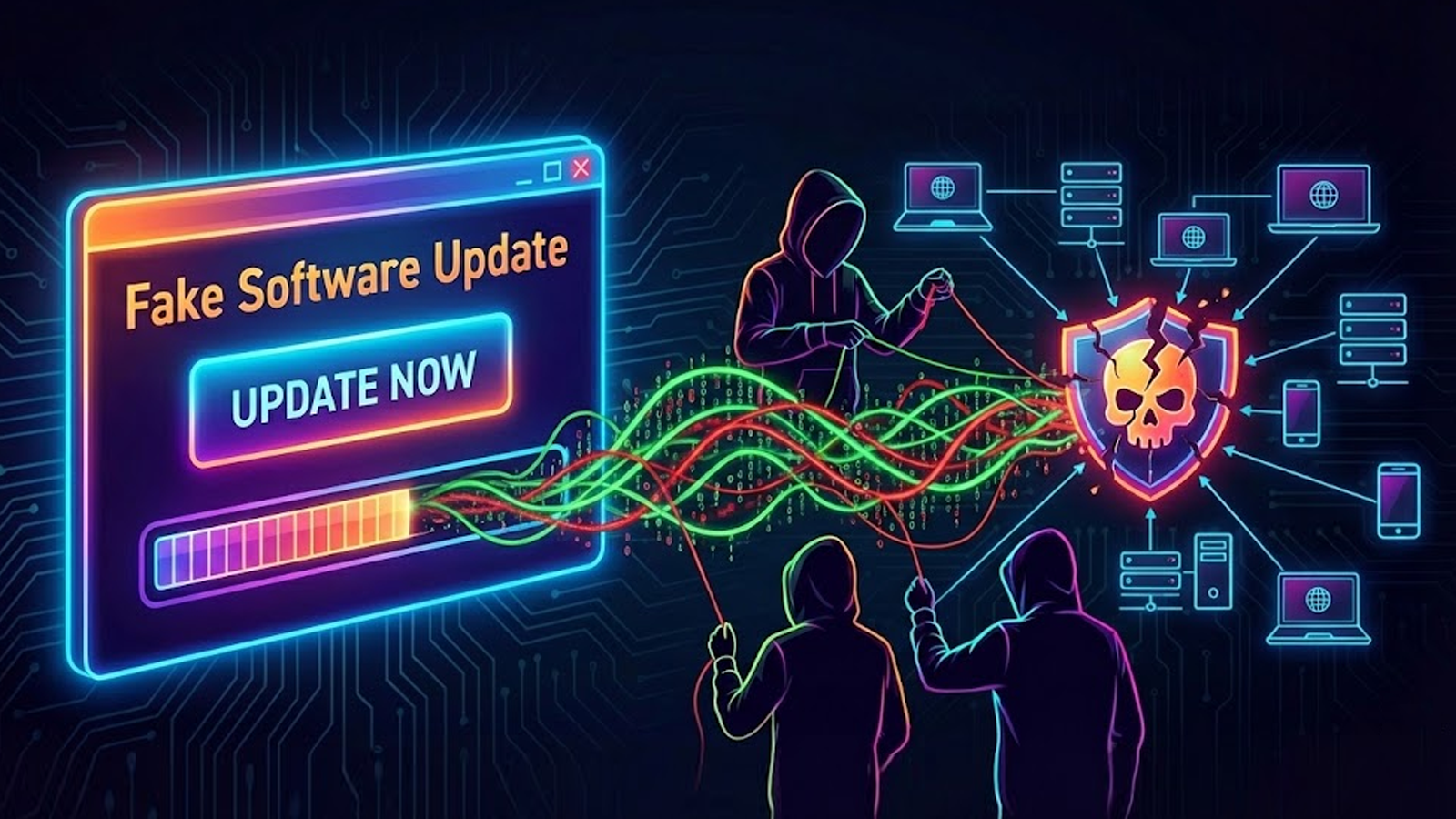
Threat actors are increasingly leveraging convincing fake software update lures to distribute the dangerous SocGholish malware. This sophisticated malware delivery framework, first identified in 2017, has evolved significantly from a rudimentary web-based annoyance into a potent tool enabling widespread ransomware operations that target organizations globally. Recent campaigns highlight how easily legitimate users can fall victim to these deceptive update prompts, leading to severe system compromise and potential network-wide attacks.
SocGholish operates as a malware-as-a-service platform, with threat actors compromising legitimate websites to embed malicious JavaScript code. When unsuspecting users visit these compromised sites, they encounter authentic-looking, urgent fake update notifications. These deceptive prompts are designed to trick users into downloading malicious payloads, often disguised as essential browser updates for popular applications like Chrome or Firefox. The potential impact is immense, including system encryption, prolonged downtime, and significant data theft.
Understanding the SocGholish Infection Mechanism
The infection chain initiated by SocGholish is a testament to the evolving sophistication of modern cyberattacks. The process begins with obfuscated JavaScript, which automatically executes when a user clicks on a fake update button. This initial script then establishes a connection to malicious command-and-control (C2) servers, retrieving further payloads. These subsequent payloads often include reconnaissance tools and loaders designed to prepare the system for further malicious activity.
Security analysts, such as those at Arctic Wolf, have observed threat actors employing advanced techniques to evade detection. In a notable incident in September 2025, SocGholish was used to deliver RomCom’s Mythic Agent to a United States-based engineering company with connections to Ukraine. Arctic Wolf researchers documented attackers utilizing PowerShell commands with subtle detection evasion tactics, including the insertion of quotation marks within commands to bypass security monitoring systems. This allows for a stealthier execution of malicious routines.
Following successful initial compromise and reconnaissance, the attackers deploy secondary payloads. A critical aspect of SocGholish’s persistence lies in its ability to establish a long-term foothold within compromised systems. This is often achieved through the creation of scheduled tasks that ensure the malware remains active even after system reboots. These scheduled tasks are frequently based on Python backdoors, designed to run at regular intervals, granting threat actors sustained access and ample time for hands-on-keyboard operations.
The Danger of Persistent Access
The persistence mechanism employed by SocGholish is particularly concerning. By scheduling malicious backdoors to run automatically, attackers create a resilient presence within the victim’s network. This persistent access allows threat actors to conduct extensive data exfiltration and carefully plan and execute ransomware deployments without immediate detection. For organizations, this translates to a heightened risk of significant financial and operational disruption.
The implications of a successful SocGholish infection are far-reaching. Beyond the immediate threat of data theft, the malware frequently serves as a preliminary stage for major ransomware attacks. This means that an organization encountering SocGholish should consider it a critical warning sign, indicating a high probability of subsequent ransomware deployment that could encrypt vital data and bring operations to a standstill. The financial ramifications can be devastating, encompassing not only the costs of system encryption and recovery but also extended business downtime and potential legal liabilities stemming from data breaches.
To defend against this evolving threat landscape, organizations must implement robust endpoint detection and response (EDR) solutions. Maintaining up-to-date patch levels across all software and systems is also crucial, as many attacks exploit known vulnerabilities. Furthermore, regular and comprehensive security awareness training for employees is paramount. Educating users about the dangers of fake update prompts and other social engineering tactics can significantly reduce the likelihood of successful initial compromise through deceptive lures.
The ongoing evolution of SocGholish underscores the dynamic nature of cyber threats. As threat actors continuously refine their techniques, organizations must remain vigilant and adapt their defensive strategies accordingly. The integration of advanced security technologies and a well-informed user base are the cornerstones of effective defense against such persistent and sophisticated malware delivery frameworks. The next steps for organizations involve reinforcing these layered security approaches and staying informed about emerging tactics employed by threat actors.