


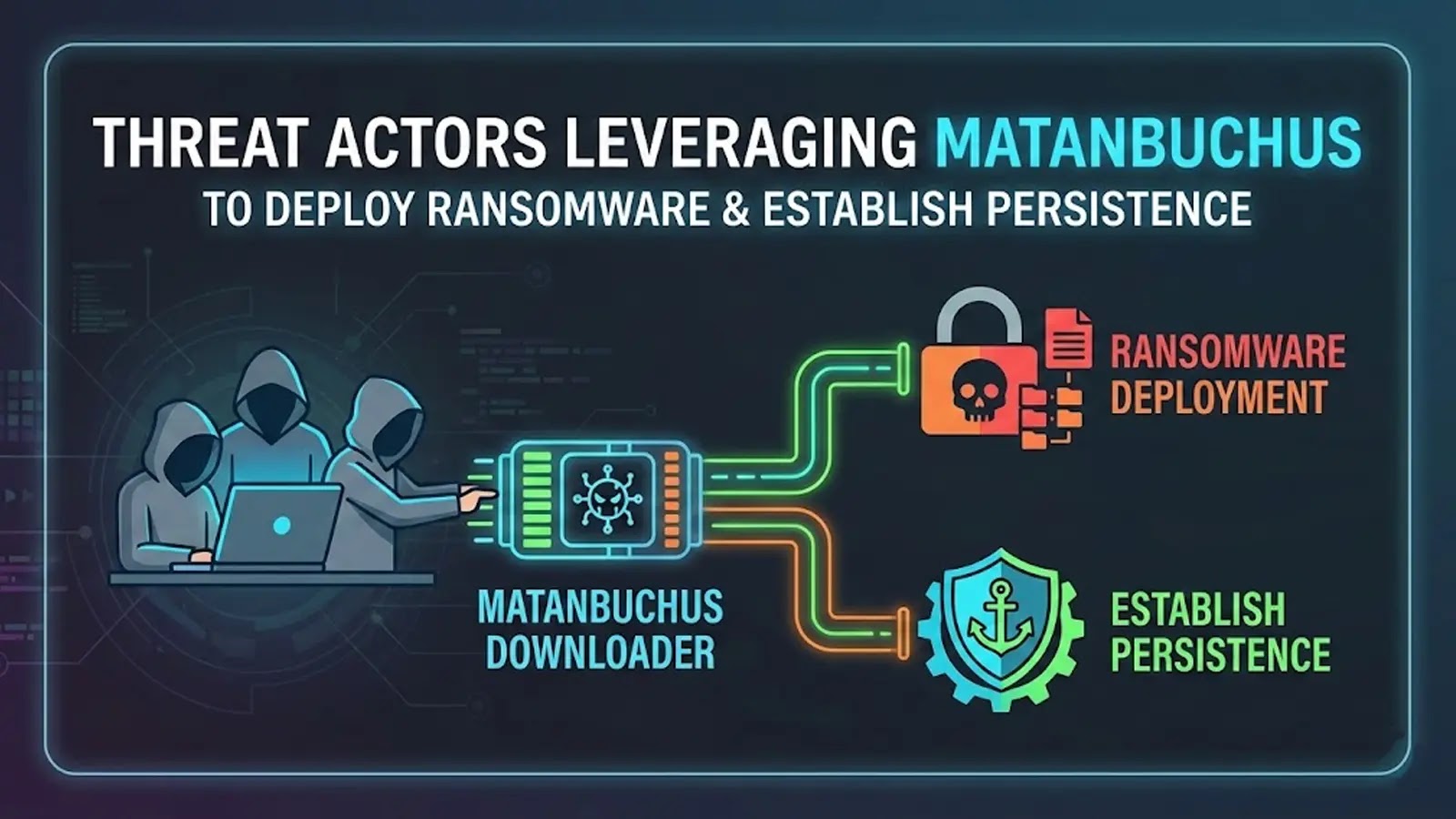
The threat actor tool known as Matanbuchus has undergone a significant evolution, with version 3.0 of this malicious downloader being actively deployed in real-world attacks. This C++-based malware-as-a-service has been available since 2020, offering threat actors a way to rent its capabilities for deploying secondary payloads, increasingly leading to ransomware attacks. Security researchers have observed new evasion techniques and enhanced control mechanisms in this latest iteration, underscoring its growing sophistication and danger to organizations.
Recent analyses by Zscaler indicate that campaigns utilizing Matanbuchus are expanding their scope. Beyond simple data theft, these operations are now frequently chaining the downloader with ransomware deployments, enabling rapid encryption attacks that can cripple business operations. The malware facilitates the download of additional malicious software onto compromised systems, allowing attackers to execute commands remotely and establish a persistent presence. This shift highlights a concerning trend in cybercriminal tactics, leveraging effective and versatile tools to achieve more impactful and disruptive outcomes.
Matanbuchus Infection Process and Persistence
The infection process for Matanbuchus is initiated when threat actors gain initial access, often through social engineering tactics combined with the exploitation of legitimate remote assistance tools like QuickAssist. Once system access is established, attackers proceed by downloading a malicious Microsoft Installer (MSI) package. This MSI file deploys an executable, HRUpdate.exe, which in turn facilitates a DLL sideloading mechanism. This sideloaded DLL serves as the initial Matanbuchus downloader module.
Following the initial download, the Matanbuchus downloader retrieves its main module from servers controlled by the attackers. This multi-stage approach is designed to circumvent detection by security software during the initial distribution phases of the malware. Security researchers have identified that this downloader is being used in conjunction with payloads like the Rhadamanthys information stealer and the NetSupport RAT, further expanding the capabilities of the compromised systems.
A critical aspect of Matanbuchus’s operation involves its advanced evasion and persistence techniques. The malware employs strong obfuscation methods, including the ChaCha20 stream cipher to encrypt strings executable at runtime. It also utilizes the MurmurHash algorithm to dynamically resolve Windows API functions, which helps to disguise its actions from security monitoring tools. Version 3.0 has introduced Protocol Buffers for serializing network communication, enabling more complex command and control interactions between the malware and its operators.
To further evade behavioral analysis and sandbox detection, the downloader incorporates deliberately long execution delays. These delays can span several minutes, allowing the malware to operate in a less scrutinized environment. Once established, persistence is achieved through downloaded shellcode that creates scheduled tasks. This ensures that the Matanbuchus malware remains active on the system, surviving reboots and maintaining its foothold for continued malicious activity.
The evolving capabilities of Matanbuchus, particularly its ability to facilitate rapid ransomware deployments and maintain persistence through sophisticated evasion techniques, present a significant and growing challenge for cybersecurity defenses. Organizations must remain vigilant, focusing on robust endpoint security, user education to prevent initial infection vectors, and a comprehensive threat detection strategy to counter the multi-stage nature of these attacks, including the use of information stealers and remote access Trojans. The ongoing development and deployment of Matanbuchus, as indicated by version 3.0’s capabilities, suggest that threat actors will continue to refine its functionality, necessitating continuous adaptation from security professionals.