


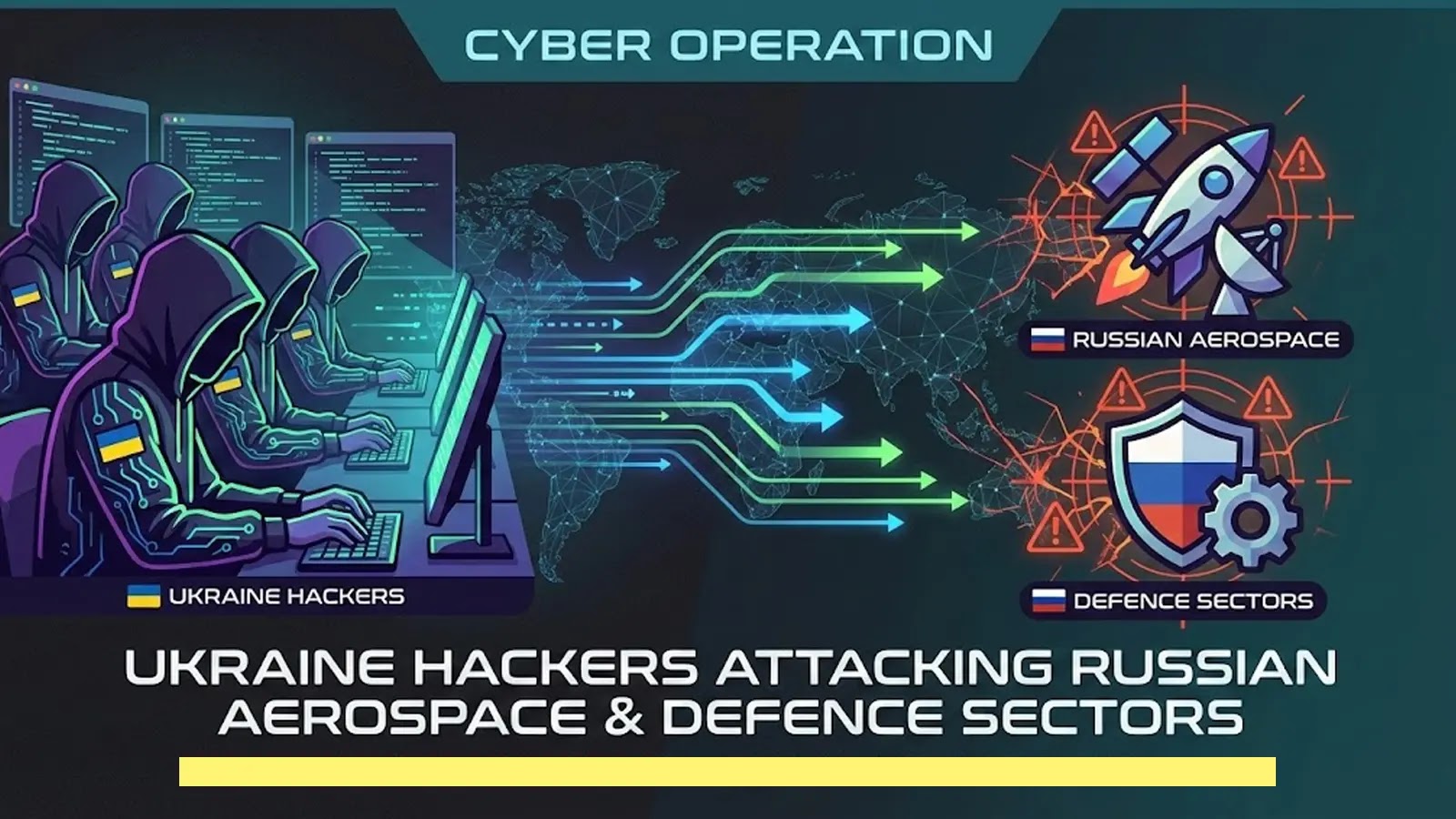
Ukraine-linked hackers are escalating their cyberattacks against Russian aerospace and defense companies, employing newly developed custom malware to exfiltrate sensitive design blueprints, production schedules, and internal communications. This intensified cyber campaign, detailed by security analysts, targets the entirety of Russia’s war industry, from major contractors to smaller specialized suppliers, aiming to map intricate production chains and identify vulnerabilities within the nation’s military-industrial complex.
The sophisticated operation, which began surfacing in late 2024, utilizes spear-phishing tactics to ensnare engineers and project managers primarily involved in avionics, guidance systems, and satellite communications. Lures, often disguised as enticing job offers, conference invitations, or urgent contract updates, contained malicious attachments. These documents exploited known vulnerabilities in outdated Microsoft Office software on Windows systems, silently deploying a low-profile loader that paved the way for the primary malicious payload.
Ukraine Hackers Target Russian Aerospace and Defence Sectors
Intrinsec security researchers first identified this persistent threat through observed anomalous outbound network traffic from a defense integrator’s remote office. This traffic was directed towards command and control servers hosted on resilient, bulletproof infrastructure, a common tactic for facilitating covert operations. The analysts’ subsequent in-depth technical investigation revealed that the attackers meticulously tailored each malware payload to the specific role of the compromised individual. This customization included specialized modules designed for efficient email scraping, document exfiltration, and the capture of login credentials, demonstrating a strategic approach to data acquisition.
The scope of this cyber operation extends to research laboratories, testing facilities, and logistics firms that are integral to the support of aircraft, drone, and missile systems. The intellectual property and operational data stolen through these cyber intrusions could significantly inform Ukrainian intelligence. Such information can expose critical components shortages, reveal delivery schedule disruptions, and highlight software defects, providing Ukrainian military planners with a clearer and more up-to-date assessment of Russia’s combat readiness and production capabilities.
Infection Chain and Command Execution
The malware’s infection chain, while straightforward in its architecture, exhibits a high degree of operational stealth. The initial loader, typically a small in-memory executable disguised as a dynamic-link library (DLL), operates without writing to disk. It retrieves a second-stage script from a hardcoded Uniform Resource Locator (URL). This script then injects the final, main payload into a legitimate, trusted system process, such as explorer.exe. This technique is designed to help the malware evade detection by blending seamlessly with normal system operations and user activity.
Intrinsec researchers highlighted that the deployed payload utilizes a compact command loop, enabling adaptability in its execution. Based on observed memory dumps, a typical command execution routine follows a simple pattern:
while (connected) {
cmd = recv();
if (cmd == “exfil”) run_exfil();
if (cmd == “shell”) open_shell();
}
This minimalist logic allows operators to dynamically switch between automated data exfiltration and direct, hands-on keyboard control over the compromised system. Each stage of the malware is engineered to minimize its digital footprint and maintain a low profile on the host machine, making detection more challenging.
Despite its streamlined design, the malware deliberately avoids overt persistence mechanisms that could trigger security alerts. Instead, it relies on methods such as scheduled tasks or the hijacking of legitimate software update tools. These indirect approaches help the malware re-establish its presence after system reboots, further complicating efforts to eradicate it from infected networks.
The ongoing cyber hostilities underscore the evolving nature of modern warfare, where digital fronts are as critical as the physical battlefield. For Russia, the repercussions of these attacks could extend beyond immediate operational impacts, potentially affecting long-term defense procurement and technological development. The effectiveness of these Ukrainian cyber operations will likely hinge on the sustained ability to bypass Russian cyber defenses and the continuous evolution of their malware techniques to counter evolving security measures. Investors and analysts will be closely watching for any public statements from Russian defense entities or regulatory bodies regarding data breaches or operational disruptions.