



The year 2026 has commenced with a continuation of persistent cybersecurity pressures, as threat actors are stealthily exploiting familiar vulnerabilities to compromise systems. Recent reports highlight a prevailing trend of steady abuse of trust, targeting everyday user actions like clicking on updates, extensions, and messages. This article recaps key security incidents and trends emerging in the early days of the year, focusing on how these quiet attacks are causing significant damage.
The cybersecurity landscape at the start of 2026 shows a concerning pattern of consistent exploitation rather than a single catastrophic event. Threat actors are leveraging established attack vectors, including compromised updates and extensions, to maintain their presence and exfiltrate data over extended periods. This ongoing abuse of trust is where the most significant damage is originating, often going unnoticed until substantial losses are incurred.
⚡ Threat of the Week: RondoDox Botnet Exploits Critical React2Shell Flaw
A significant threat emerging at the beginning of 2026 is the RondoDox botnet, which has been actively exploiting the critical React2Shell vulnerability (CVE-2025-55182) for nearly nine months. This flaw, with a CVSS score of 10.0, allows unauthenticated attackers to achieve remote code execution on susceptible Internet of Things (IoT) devices and web applications. The Shadowserver Foundation reported on January 4, 2026, that approximately 84,916 instances remain vulnerable, with a substantial concentration in the U.S. (66,200), Germany (3,600), France (2,500), and India (1,290). The continuous exploitation of this severe vulnerability underscores the ongoing challenge of patching widespread systems promptly.
🔔 Top Cybersecurity News and Trends
Several high-profile incidents are shaping the early cybersecurity narrative of 2026. These events underscore the evolving tactics of cybercriminals, their reliance on supply chain attacks, and the pervasive threat of browser extension malware.
Trust Wallet Chrome Extension Hack Linked to Shai-Hulud Supply Chain Attack
Trust Wallet has attributed a significant hack of its Google Chrome extension, resulting in an estimated $8.5 million loss in assets, to a second iteration of the Shai-Hulud (aka Sha1-Hulud) supply chain attack in November 2025. The company disclosed that exposed GitHub secrets provided attackers with access to their browser extension source code and Chrome Web Store API key. This access allowed the threat actors to upload malicious builds directly, bypassing Trust Wallet’s standard release process. Evidence suggests preparations for this attack were underway since at least December 8, 2025, with stolen wallet mnemonic phrases reportedly exfiltrated to a server displaying a “Dune” reference.
DarkSpectre Linked to Widespread Browser Extension Malware Campaigns
A newly identified Chinese threat group, DarkSpectre, is associated with one of the most extensive browser extension malware operations discovered to date, impacting over 8.8 million users across Chrome, Edge, Firefox, and Opera over seven years. DarkSpectre’s operations are characterized by disparate but interconnected malware clusters, each with distinct objectives. The ShadyPanda campaign, responsible for 5.6 million infections, focuses on long-term user surveillance and e-commerce fraud. The GhostPoster campaign, affecting over one million users, uses steganography within PNG images to conceal malicious JavaScript payloads. A third campaign, The Zoom Stealer, has exposed approximately 2.2 million users to corporate espionage, indicating a highly organized criminal entity dedicated to distributing malicious code via legitimate-looking extensions.
U.S. Treasury Lifts Sanctions on Individuals Connected to Intellexa
The U.S. Department of the Treasury’s Office of Foreign Assets Control (OFAC) has removed three individuals associated with the Intellexa Consortium, the company behind the commercial spyware Predator, from its specially designated nationals list. These individuals include Merom Harpaz, Andrea Nicola Constantino Hermes Gambazzi, and Sara Aleksandra Fayssal Hamou. According to a statement shared with Reuters, this action was part of a standard administrative process following a petition for reconsideration, with the individuals demonstrating efforts to separate themselves from the Intellexa Consortium.
Silver Fox Targets India with Tax-Themed Phishing Campaigns
The Chinese cybercrime group Silver Fox has shifted its focus to India, employing phishing campaigns that use income tax-related lures to distribute a modular remote access trojan known as ValleyRAT (aka Winos 4.0). These campaigns utilize decoy PDF documents appearing to be from India’s Income Tax Department to deliver ValleyRAT, a variant of Gh0st RAT enhanced with a plugin architecture for keylogging, credential harvesting, and defense evasion. Analysis of link management panels associated with Silver Fox indicated tracking of web pages used for delivering fake installers, with a notable number of clicks originating from China.
Mustang Panda Leverages Rootkit Driver for TONESHELL Delivery
The Chinese hacking group Mustang Panda (aka HoneyMyte) reportedly used a previously undocumented kernel-mode rootkit driver to deploy a new variant of the TONESHELL backdoor in a mid-2025 cyber attack targeting an unspecified entity in Asia. The rootkit driver’s primary function is to inject the backdoor trojan into system processes and protect malicious files, user-mode processes, and registry keys. TONESHELL, designed with reverse shell and downloader capabilities, has been used by Mustang Panda since late 2022, with C2 infrastructure noted as being erected in September 2024, though campaign activity likely commenced later.
️🔥 Trending CVEs in the Early Weeks of 2026
The rapid exploitation of newly discovered vulnerabilities remains a critical concern for organizations. Attackers can leverage these flaws within hours of disclosure, making prompt patching essential. This week’s list highlights serious security flaws that require immediate attention.
This week’s notable CVEs include CVE-2025-13915 affecting IBM API Connect, CVE-2025-52691 for SmarterTools SmarterMail, CVE-2025-47411 in Apache StreamPipes, CVE-2025-48769 for Apache NuttX RTOS, and CVE-2025-14346 impacting WHILL Model C2 Electric Wheelchairs and Model F Power Chairs. Additionally, vulnerabilities in QNAP devices (CVE-2025-52871, CVE-2025-53597) and Eaton UPS Companion units (CVE-2025-59887, CVE-2025-59888) are also highlighted, emphasizing the diverse range of systems now under attack.
📰 Around the Cyber World: Key Developments and Trends
The global cybersecurity landscape continues to evolve, with notable trends in cryptocurrency attacks, software supply chain security, influence operations, and the growing sophistication of ransomware. These developments highlight the dynamic nature of cyber threats.
Crypto Breaches Surpass $2.9 Billion in 2025
According to preliminary statistics from blockchain security firm SlowMist, approximately 200 security incidents targeted the cryptocurrency community in 2025, resulting in losses of around $2.935 billion. While the number of incidents decreased from 410 in 2024, the total losses saw a significant increase of approximately 46%, indicating a trend towards larger, more impactful breaches.
PyPI Reports Strong 2FA Adoption
The Python Software Foundation announced that 52% of active PyPI users now utilize two-factor authentication (2FA) to secure their accounts, with over 50,000 projects employing trusted publishing methods. PyPI has also implemented several other security measures, including warnings for untrusted domains, protections against malicious ZIP files, flagging of potential typosquatting during project creation, and checks for expired domains to prevent resurrection attacks.
TikTok Disrupts Hungarian Influence Network
TikTok reported the removal of a network comprising 95 accounts and 131,342 followers originating from Hungary that aimed to influence audiences within the country. The platform stated that these accounts were inauthentic and were used to amplify narratives favorable to the Fidesz political party, coordinating activities across multiple online platforms.
Handala Team Breaches Telegram Accounts of Israeli Officials
The pro-Iranian group Handala has reportedly compromised the Telegram accounts of prominent Israeli political figures, including former Prime Minister Naftali Bennett and Tzachi Braverman, Netanyahu’s Chief of Staff. Security researchers suggest the attack vectors likely included social engineering, spear phishing targeting credentials and OTPs, or unauthorized access to session files or cloud backups. While the group’s claims about the scope of the breach may be exaggerated, the incident underscores the critical need for robust session management and multi-factor authentication.
Bluetooth Headphone Vulnerabilities Detailed
Further details have emerged regarding three vulnerabilities impacting Bluetooth headphones utilizing Airoha chips: CVE-2025-20700, CVE-2025-20701, and CVE-2025-20702. These flaws, affecting popular brands like Sony, Marshall, and JBL, could allow an attacker within physical proximity to silently connect to headphones, exfiltrate flash memory, and extract the Bluetooth Link Key. This could enable device impersonation, connection to target phones, and eavesdropping on conversations.
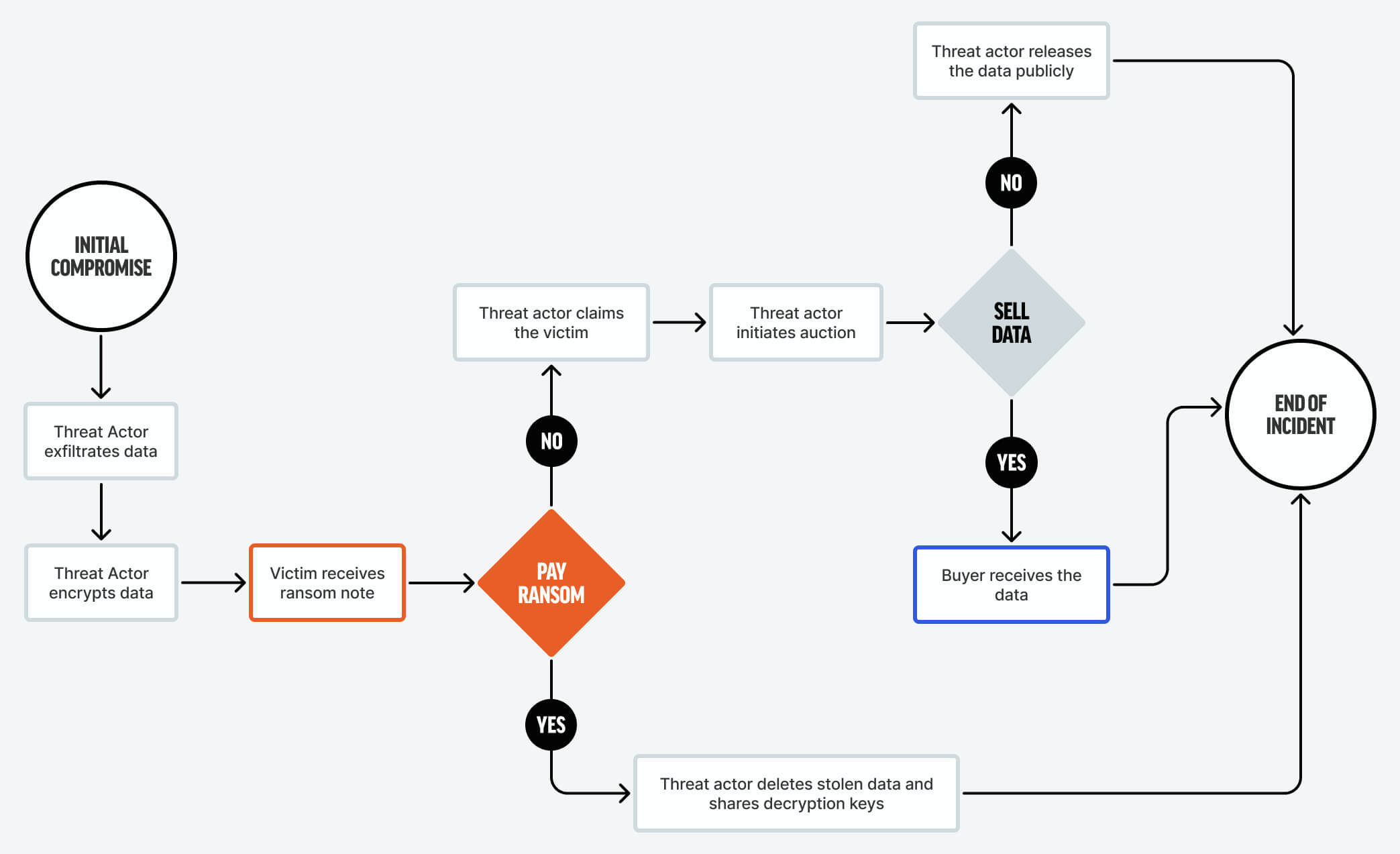
Ransomware Evolves into “Bidding Wars” for Stolen Data
Ransomware operations are increasingly evolving into structured, profit-driven enterprises that not only demand ransom for stolen data but also monetize it by selling it to the highest bidder through data auctions. This expansion of profit streams is amplifying both the frequency and impact of ransomware attacks. Rapid7 noted that the rise of data auctions reflects a maturing underground economy that mirrors legitimate market behaviors, contributing to the professionalization of global ransomware activity.
Microsoft Teams Abused for Callback Phishing Attacks
Threat actors are exploiting Microsoft Teams notifications for callback phishing schemes. Attackers create groups with scam-related team names and urge recipients to call a fake support number for unauthorized charges. Because these messages originate from the official Microsoft Teams sender address, they may bypass user suspicion and email filters.
Teams Vishing Attacks Lead to .NET Malware Deployment
In a separate campaign, threat actors are using vishing attacks originating from Microsoft Teams to trick users into installing Quick Assist software, ultimately leading to the deployment of a multi-stage .NET malware. Attackers impersonate IT staff and convince users to launch Quick Assist, which then executes a malicious updater executable that downloads encryption keys and payloads from external sites for fileless execution.
SEO Poisoning Distributes Oyster Backdoor
A persistent search engine optimization (SEO) poisoning campaign is continuously promoting fake websites when users search for Microsoft Teams or Google Meet, aiming to distribute a backdoor known as Oyster. This malware distribution threat has been active since at least November 2024, with attackers leveraging bogus sites hosting trojanized versions of legitimate tools to deliver the malware.
Fake SAP Concur Extensions Deliver FireClient Malware
A new campaign identified by BlueVoyant involves the distribution of fake SAP Concur browser extensions. The installers for these fake extensions contain a loader that gathers host information and sends it to a command-and-control server before deploying an embedded backdoor called FireClient. This backdoor can execute remote commands and is believed to be distributed via malvertising and the hijacking of search queries for “Concur log in.” The campaign employs tactics like using a portable version of Firefox and running it in headless mode to evade detection.
OpenAI Acknowledges Persistent Prompt Injection Risks in Browser Agents
OpenAI has released a security update for its ChatGPT Atlas browser agent, incorporating an adversarially trained model and enhanced safeguards to combat prompt injection attacks. The company acknowledges that “agent mode” broadens the threat surface and that prompt injection, akin to web-based scams, is unlikely to be fully resolved. However, OpenAI remains optimistic that a proactive, rapid response loop can significantly reduce real-world risk over time by combining automated attack discovery with adversarial training and system-level defenses. These developments align with similar efforts by other major tech companies to address AI-driven security threats.
Conclusion
The cybersecurity incidents and trends observed at the start of 2026 collectively paint a picture of persistent and evolving threats. The repeated exploitation of similar weaknesses from varying angles, coupled with the reuse and scaling of successful attack methods, highlights a need for constant vigilance. Organizations should use this recap as a framework for reviewing their existing security postures, recognizing that familiar problems, if not addressed, are the most likely to be missed again, leaving them vulnerable to ongoing cyber-attacks.