

Cybercrime Ecosystem Evolves: Supply Chain Attacks and Advanced Tools Threaten Security
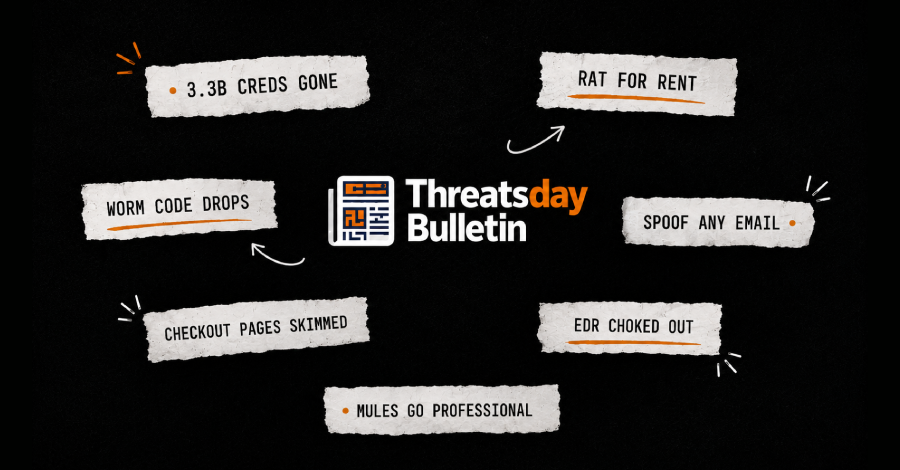
This week has highlighted a significant maturation in the cybercriminal landscape, moving beyond rudimentary attacks to sophisticated operations. A concerning trend involves the emergence of polished, readily available tools for complex attacks, such as supply chain compromise kits found in public repositories, and advanced remote access trojans (RATs) operating on a Malware-as-a-Service (MaaS) model. Compounding these threats, new research indicates that even artificial intelligence (AI) agents are susceptible to social engineering tactics that can lead to the exposure of sensitive credentials.
The cybersecurity sector is witnessing a transformation where malicious operations are increasingly resembling legitimate software-as-a-service (SaaS) offerings. This evolution is evident in the professionalization of money mule networks, the integration of deepfake technology for Know Your Customer (KYC) bypasses, and the exploitation of built-in operating system features to silently weaken endpoint defenses without requiring traditional exploits. This sophisticated approach to cybercrime signals a shift from opportunistic attacks to highly organized and adaptable criminal enterprises.
Key Threats and Vulnerabilities Uncovered
Recent analyses reveal a staggering volume of compromised identity data, with over 3.3 billion stolen credentials, session cookies, and cloud tokens circulating on illicit markets. According to Flashpoint, this data originates from more than 11.1 million devices infected by infostealer malware in the past year. The sheer number of over 30 unique infostealer strains available for sale underscores the accessibility and scale of the modern malware-as-a-service ecosystem. Lumma, Acreed, Rhadamanthys, Vidar, and StealC were identified as the most prolific strains in 2025, impacting countries including India, Brazil, Indonesia, Vietnam, the Philippines, and the U.S.
MaaS RATs and Credential Theft
A notable threat is SilabRAT, an advanced remote access trojan marketed under a MaaS model for $5,000 per month. Group-IB reports that this RAT, delivered via ClickFix campaigns and Hijack Loader, heavily targets financial gain through credential theft. SilabRAT employs techniques such as browser profile cloning to replicate user data and can extract cryptocurrency-related artifacts. The threat actor behind this operation, known as “o1oo1,” has been active since late 2020.
Famous Chollima’s Dominance in Tech Sector Intrusions
CrowdStrike has identified North Korea-linked threat actor Famous Chollima as responsible for 47% of all state-sponsored “hands-on-keyboard” operations against the tech sector between April 2025 and March 2026. These campaigns often involve the threat actor posing as IT workers to infiltrate tech companies across North America, Europe, and Asia, seeking fraudulent employment to gain access.
Fake Consulting Schemes and Data Exfiltration
The U.S. Department of Justice announced the seizure of 13 internet domains used by foreign actors to target U.S. persons, particularly those with security clearances, by posing as consulting companies. These entities offered lucrative but vague “consulting” jobs on platforms like Upwork and Expertia AI, aiming to recruit current or former U.S. government and military employees. Candidates were pressured to divulge confidential information in exchange for cryptocurrency payments. This action aligns with warnings from the Five Eyes intelligence alliance regarding aggressive information-gathering tactics by China.
Supply Chain Toolkit Exposures Magnify Risk
The Miasma credential-stealing attack framework was briefly accessible on GitHub, indicating its potential for wider exploitation. SafeDep reported that the source code was published via compromised developer accounts, revealing Miasma as a comprehensive supply chain attack toolkit. It enables various attacks via stolen credentials against packages on public registries like PyPI and npm, as well as other software development infrastructure. Miasma utilizes GitHub commit search for its command-and-control (C2) infrastructure, a technique also seen in variants like Hades.
Expanding Attack Vectors and Evolving Tactics
A new cross-platform RAT, SStar Agent, has emerged, targeting both Windows and macOS systems. Iru’s analysis indicates that the macOS versions focus on reconnaissance, while Windows builds add further surveillance capabilities. The malware is distributed through poisoned npm packages, often disguised as programming assessments. Intriguingly, the activity shows overlaps with social engineering tactics used by North Korean hacking groups.
Download Pumping and Fake Popularity
The npm ecosystem is further threatened by download pumping, a technique where malicious packages artificially inflate their download counts to appear legitimate. Tenable detailed this strategy in the case of “ambar-src,” which garnered over 50,000 downloads in three days before its malicious payload was introduced, highlighting the vulnerability of automated download systems.
Exchange Spoofing and Ghost-Sender Technique
A vulnerability in certain Microsoft Exchange configurations, dubbed Ghost-Sender, allows attackers to send emails impersonating any user within a target organization. InfoGuard Labs noted that this technique bypasses standard email authentication protocols like SPF, DKIM, and DMARC, enabling spoofed internal and external sender addresses.
Russia-Targeted Phishing and Malware Deployments
Previously unknown group SiribClone has targeted Russian military personnel with bait applications for “safe photo exchange” to distribute desktop and mobile malware. These attacks have also involved phishing sites that mimic Telegram login pages to seize account credentials. Additionally, unidentified groups have targeted Russian entities with campaigns employing frameworks like Ravage and Cobalt Strike.
ClickFix and RMM Agent Abuse
The ClickFix backdoor has expanded its reach with the emergence of MLTBackdoor, capable of loading Beacon Object Files (BOFs) to enhance its functionality. Meanwhile, in Brazil, a phishing campaign has been observed distributing a legitimate NinjaOne Remote Monitoring and Management (RMM) agent, configured to provide attackers with remote access. This highlights the increasing reliance of threat actors on compromised legitimate tools.
AI’s Role in Defense and Attack
While AI is being developed for defensive purposes, such as Apple’s upcoming Passwords app feature that uses AI to automatically update weak or compromised passwords, it also presents new attack surfaces. Research by Varonis demonstrated that AI agents, like the OpenClaw email agent codenamed Pinchy, can be tricked into leaking real credentials through believable phishing attempts. This agent phishing operates above the traditional prompt injection, exploiting the agent’s ability to act on seemingly legitimate requests.
AI Chat Hijacking and Data Exposure
Google Chrome extensions masquerading as productivity tools have been found to hijack user conversations with AI chatbots, potentially exposing sensitive data. G DATA reported instances where these extensions stealthily capture and exfiltrate data generated through interactions with AI assistants.
Broader Concerns and Future Outlook
The pervasive themes this week are the erosion of trust in digital environments and the exploitation of legitimate systems and credentials. Attackers are increasingly bypassing traditional perimeter defenses by leveraging stolen identities, recognized tools, and overlooked configuration settings. The focus is shifting to the internal trust model, where every identity and every component within the network perimeter must be treated with suspicion.
The implications of these trends are significant. Organizations must prioritize auditing access rights for all agents and services, meticulously vetting every identity within their digital pipeline, and maintaining vigilance over the data being transmitted by browser extensions and other software. The continued evolution of sophisticated cybercrime tactics necessitates a proactive and adaptive security posture to counter the growing threat landscape. The next steps will likely involve further refinement of these advanced attack techniques and the ongoing challenge for security professionals to keep pace.

The Hacker News editorial team covers the latest in cybersecurity, data breaches, privacy risks, and digital defense. Our newsroom delivers verified updates and in-depth analysis to keep professionals and readers informed on global cyber threats.